Aveeno
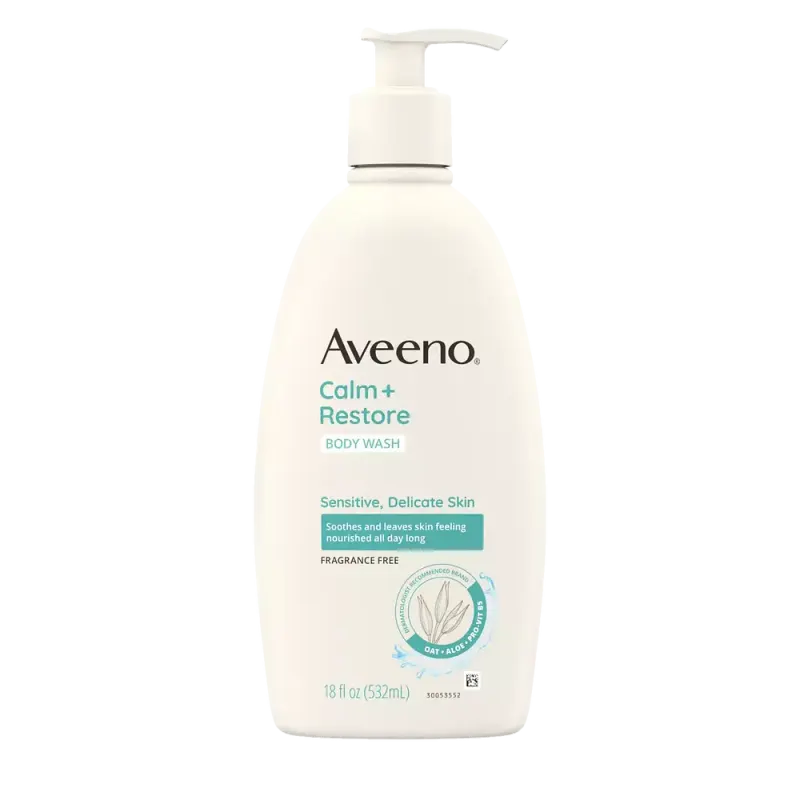
Aveeno Calm + Restore Body Wash
Body Washesbody care
Safety score
Pregnancy-focused assessment
No Known Risks99/100
Higher concernLower concern
No higher-risk ingredients were identified in MamaSkin's current assessment. Check the latest package before deciding.
Formula and assessment check
Ingredient safety review updated 24 November 2025. Product formulas can change, so compare the ingredients shown here with the packaging you have.
Report a formula mismatchIngredient breakdown
See how the listed formula falls across MamaSkin's pregnancy-focused risk bands.
18
No known risks
0
Low risk
0
Medium risk
0
High risk
Ingredients
Ingredients with a higher risk flag appear first, followed by the rest of the formula.
Cocamidopropyl Betaine
No Known RisksMild amphoteric surfactant used in cleansers and shampoos to boost foam and reduce harshness. Reviewed cosmetic safety sources support present cosmetic use, with no pregnancy- or breastfeeding-specific topical signal identified; the main practical caveat is irritation or allergy in some users, sometimes linked to sensitising impurities.
Sources: CIR: Safety Assessment of Cocamidopropyl Betaine and Related Amidopropyl Betaines as Used in Cosmetics; EU CosIng / cosmetics regulatory inventory
Glycerin
No Known RisksGlycerin is a widely used humectant that supports hydration and the skin barrier, with a long safety record and no known pregnancy or breastfeeding concerns in topical cosmetic use.
Sources: CIR; EU/UK Cosmetics Regulation
Show all (18)
Sodium Lauroamphoacetate
No Known RisksA mild surfactant used for cleansing, foaming or formula stabilisation. The practical concern is formulation-dependent irritation, particularly in strong cleansers. No pregnancy-specific systemic concern was identified for normal topical or rinse-off exposure.
Sources: CIR safety assessments of alkyl betaines, amphoacetates, and dialkyl sulfosuccinate salts; European Commission CosIng ingredient inventory.
Coco-Glucoside
No Known RisksThis glucose-derived nonionic surfactant or emulsifier is used in cleansers and emulsions. The Cosmetic Ingredient Review concluded that alkyl glucosides are safe in current cosmetic use when formulated to be non-irritating; sensitive skin can still react to surfactants.
Sources: CIR: Safety Assessment of Decyl Glucoside and Other Alkyl Glucosides as Used in Cosmetics https://cir-reports.cir-safety.org/view-attachment/?id=9810a771-8e74-ec11-8943-0022482f06a6
Polyquaternium-7
No Known RisksA large conditioning and film-forming polymer used mainly in hair and cleansing products. Cosmetic safety reviewers concluded that Polyquaternium-7 is safe in current cosmetic use at the reviewed concentrations. Its polymeric nature limits systemic exposure, and no pregnancy-specific concern is identified for normal topical use.
Sources: CIR: Safety Assessment of Polyquaternium-7, cited in the CIR Quick Reference Table https://www.cir-safety.org/sites/default/files/safe-092017posted122017.pdf
Panthenol
No Known RisksPanthenol (pro-vitamin B5) is used for soothing and barrier support and is generally well tolerated, with no known pregnancy or breastfeeding concerns in topical cosmetic use.
Sources: CIR; EU/UK Cosmetics Regulation
Glyceryl Oleate
No Known RisksA glycerol and oleic-acid ester used as an emulsifier and skin-conditioning ingredient. Cosmetic safety assessments and its well-characterized metabolic components support current cosmetic use without a pregnancy- or breastfeeding-specific concern from normal topical exposure.
Sources: CIR: Amended Safety Assessment of Monoglyceryl Monoesters https://www.cir-safety.org/sites/default/files/monoglyceryl%20monoesters.pdf; CIR ingredient record: Glyceryl Oleate https://cir-safety.org/ingredient/glyceryl-oleate
Avena Sativa Kernel Flour
No Known RisksFinely milled oat kernel material used for soothing, absorbency and skin conditioning. Cosmetic safety reviewers concluded that Avena sativa kernel flour is safe in current practices when formulated to be non-sensitising. People with oat sensitivity may still react, and loose powder should not be deliberately inhaled.
Sources: CIR: December 2025 Quick Reference Table, Avena Sativa (Oat) Kernel Flour conclusion, IJT 38(Suppl. 3), 2019 https://cir-safety.org/sites/default/files/QRT-Update-Dec2025.pdf
Aloe Barbadensis Leaf Extract
No Known RisksBotanical skin-conditioning ingredient used in soothing and hydrating formulas. Reviewed cosmetic safety sources support current cosmetic use provided anthraquinone levels do not exceed the limits addressed in the safety assessment; no pregnancy- or breastfeeding-specific topical concern was identified in the material reviewed.
Sources: CIR: Safety Assessment of Aloe-derived Ingredients as Used in Cosmetics; EU CosIng / cosmetics regulatory inventory
Avena Sativa Kernel Extract
No Known RisksAn oat kernel extract used for skin conditioning and soothing. Cosmetic safety reviewers concluded that Avena sativa kernel extract and most assessed oat-derived ingredients are safe in current practices of use and concentration when formulated to be non-sensitising and manufactured with appropriate impurity controls. Oat allergy or contact sensitivity can occur in susceptible people, but no pregnancy-specific concern was identified for normal topical cosmetic exposure.
Sources: CIR: Safety Assessment of Avena sativa (Oat)-Derived Ingredients as Used in Cosmetics https://cir-reports.cir-safety.org/view-attachment/?id=947dbaa1-8e74-ec11-8943-0022482f06a6
Sodium Chloride
No Known RisksSodium chloride is used to adjust viscosity and texture in formulations; topical cosmetic use is considered low concern with no known pregnancy or breastfeeding risks.
Sources: CIR; EU/UK Cosmetics Regulation
Hydroxypropyl Starch Phosphate
No Known RisksA modified starch used mainly to thicken and stabilize cosmetic formulas. Cosmetic safety reviewers concluded that starch phosphates, including hydroxypropyl starch phosphate, are safe in current cosmetic use. No pregnancy- or breastfeeding-specific concern is identified for normal topical exposure.
Sources: CIR: Safety Assessment of Starch Phosphates https://cir-safety.org/sites/default/files/FR_StarchPhosphates_092022.pdf
Citric Acid
No Known RiskspH adjuster used in small amounts to maintain product stability. Not associated with pregnancy-specific concerns.
Sources: Scientific Committee on Consumer Safety (EU); European cosmetics regulatory framework
Acrylates/C10-30 Alkyl Acrylate Crosspolymer
No Known RisksPolymer thickener and stabiliser used in creams and sunscreens. Low systemic exposure expected.
Sources: Cosmetic Ingredient Review (US); Scientific Committee on Consumer Safety (EU)
Sodium Benzoate
No Known RisksPreservative widely used in foods and cosmetics. Considered safe at regulated concentrations with low systemic exposure from topical use.
Sources: Scientific Committee on Consumer Safety (EU); European cosmetics regulatory framework
Sodium Hydroxide
No Known RiskspH adjuster used in very small quantities to balance formulations. Not associated with pregnancy-specific concerns.
Sources: Scientific Committee on Consumer Safety (EU); European cosmetics regulatory framework
Disodium EDTA
No Known RisksDisodium EDTA is a chelating agent used to improve formula stability and performance; it is considered low concern in topical cosmetic use, with no known pregnancy or breastfeeding risks at typical concentrations.
Sources: CIR; EU/UK Cosmetics Regulation
Formulations can change without notice. For the most accurate result, compare this list with your packaging and scan the exact ingredient label in MamaSkin when you repurchase.
How to use this assessment
The risk band is the primary conclusion. The score adds detail within that band and should not be used to compare products as if a one-point difference were clinically meaningful.
MamaSkin provides pregnancy-focused information, not medical advice. Your midwife, GP, pharmacist or dermatologist should take priority when your circumstances differ from typical cosmetic use.