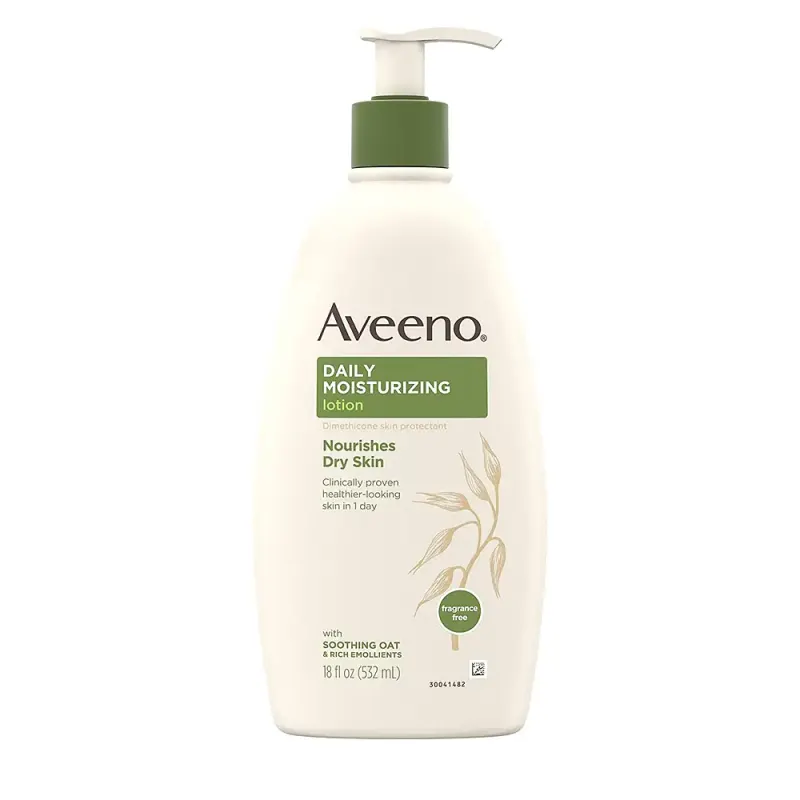
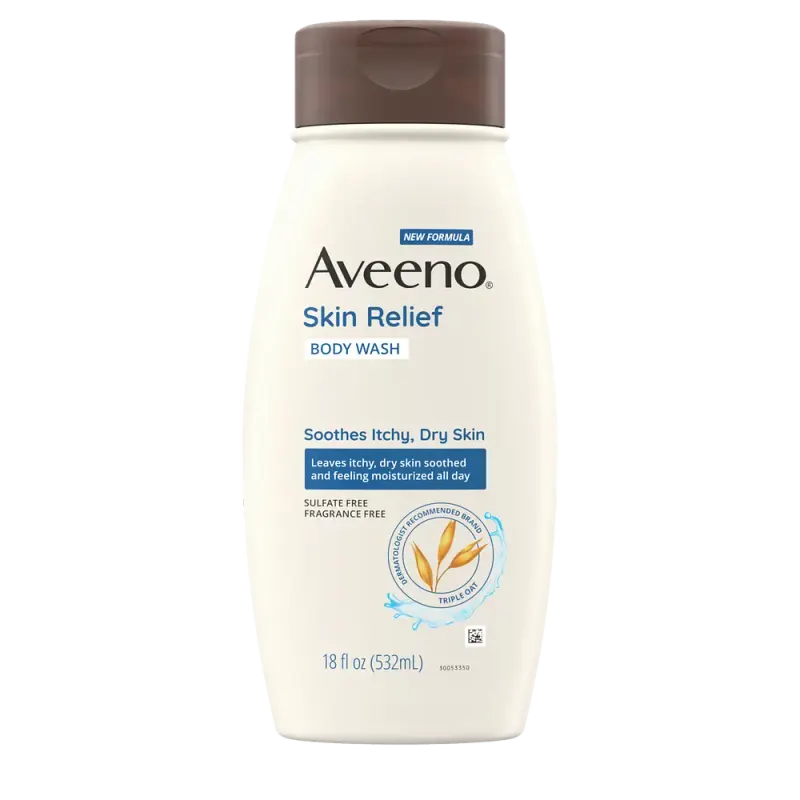
Aveeno Skin Relief Body Wash by Aveeno
Aveeno

Aveeno Skin Relief Body Wash

Body Washesbody care

Safety score

Pregnancy-focused assessment

Medium Risk58/100
Higher concernLower concern

This formula contains an ingredient that needs extra caution in MamaSkin's pregnancy-focused assessment.

Formula and assessment check

Ingredient safety review updated 1 August 2026. Product formulas can change, so compare the ingredients shown here with the packaging you have.

Report a formula mismatch

Ingredient breakdown

See how the listed formula falls across MamaSkin's pregnancy-focused risk bands.

17

No known risks

0

Low risk

1

Medium risk

0

High risk

Ingredients

Ingredients with a higher risk flag appear first, followed by the rest of the formula.

Commiphora Myrrha Oil

Medium Risk

Myrrh oils are concentrated Commiphora volatile preparations. EMA states that safety of medicinal myrrh during pregnancy and lactation has not been established and does not recommend use in the absence of sufficient data. Experimental reproductive signals do not define the absorbed dose from a finished cosmetic, so MamaSkin applies Medium rather than High Risk and does not automatically extend this classification to resin extracts.

Sources: EMA Community herbal monograph on Commiphora molmol gummi-resina https://www.ema.europa.eu/en/documents/herbal-monograph/final-community-herbal-monograph-commiphora-molmol-engler-gummi-resina_en.pdf; Maternal Reproductive Toxicity of Some Essential Oils and Their Constituents https://pmc.ncbi.nlm.nih.gov/articles/PMC7956842/; European Commission CosIng.
2,6-Dimethyl-7-Octen-2-Ol

No Known Risks

Acrylates/C10-30 Alkyl Acrylate Crosspolymer

No Known Risks

Polymer thickener and stabiliser used in creams and sunscreens. Low systemic exposure expected.

Sources: Cosmetic Ingredient Review (US); Scientific Committee on Consumer Safety (EU)

Show all (18)

Avena Sativa Kernel Extract

No Known Risks

An oat kernel extract used for skin conditioning and soothing. Cosmetic safety reviewers concluded that Avena sativa kernel extract and most assessed oat-derived ingredients are safe in current practices of use and concentration when formulated to be non-sensitising and manufactured with appropriate impurity controls. Oat allergy or contact sensitivity can occur in susceptible people, but no pregnancy-specific concern was identified for normal topical cosmetic exposure.

Sources: CIR: Safety Assessment of Avena sativa (Oat)-Derived Ingredients as Used in Cosmetics https://cir-reports.cir-safety.org/view-attachment/?id=947dbaa1-8e74-ec11-8943-0022482f06a6

Avena Sativa Kernel Flour

No Known Risks

Finely milled oat kernel material used for soothing, absorbency and skin conditioning. Cosmetic safety reviewers concluded that Avena sativa kernel flour is safe in current practices when formulated to be non-sensitising. People with oat sensitivity may still react, and loose powder should not be deliberately inhaled.

Sources: CIR: December 2025 Quick Reference Table, Avena Sativa (Oat) Kernel Flour conclusion, IJT 38(Suppl. 3), 2019 https://cir-safety.org/sites/default/files/QRT-Update-Dec2025.pdf

Avena Sativa Kernel Oil

No Known Risks

A plant-derived fatty oil or butter used mainly as an emollient, conditioning ingredient or texture agent. Cosmetic safety reviewers concluded that the assessed plant-derived fatty acid oils are safe in current practices of use and concentration. This conclusion applies to cosmetic-grade fixed oils rather than similarly named volatile essential oils. Seed or food allergy may still matter for a susceptible person.

Sources: CIR: Safety Assessment of Plant-Derived Fatty Acid Oils as Used in Cosmetics https://cir-reports.cir-safety.org/view-attachment/?id=ad62ac6b-8e74-ec11-8943-0022482f06a6

Caprylyl Glycol

No Known Risks

Humectant and preservative booster used to support product stability. Low systemic exposure expected from topical cosmetic use.

Sources: Scientific Committee on Consumer Safety (EU); Cosmetic Ingredient Review (US)

Cocamidopropyl Betaine

No Known Risks

Mild amphoteric surfactant used in cleansers and shampoos to boost foam and reduce harshness. Reviewed cosmetic safety sources support present cosmetic use, with no pregnancy- or breastfeeding-specific topical signal identified; the main practical caveat is irritation or allergy in some users, sometimes linked to sensitising impurities.

Sources: CIR: Safety Assessment of Cocamidopropyl Betaine and Related Amidopropyl Betaines as Used in Cosmetics; EU CosIng / cosmetics regulatory inventory

Dipropylene Glycol

No Known Risks

Dipropylene glycol is used as a solvent and carrier in cosmetics; topical exposure is low and it has no known pregnancy or breastfeeding concerns at cosmetic concentrations.

Sources: CIR; EU/UK Cosmetics Regulation

Ethylene Brassylate

No Known Risks

Ethylene brassylate is a macrocyclic fragrance. Safety assessment covered genotoxicity, repeat dose, developmental and reproductive, respiratory, phototoxicity and sensitisation endpoints and supported current use.

Sources: RIFM assessment https://pubmed.ncbi.nlm.nih.gov/27697541/; macrocyclic lactone assessment https://pubmed.ncbi.nlm.nih.gov/21820029/.

Glycerin

No Known Risks

Glycerin is a widely used humectant that supports hydration and the skin barrier, with a long safety record and no known pregnancy or breastfeeding concerns in topical cosmetic use.

Sources: CIR; EU/UK Cosmetics Regulation

Peg-80 Sorbitan Laurate

No Known Risks

peg-80 sorbitan laurate is a cosmetic surfactant, emulsifier or conditioning agent. Relevant CIR family assessments support use when formulated to be non-irritating and with appropriate impurity controls. Local skin or eye irritation is possible, but no pregnancy-specific concern was identified for normal topical or rinse-off use.

Sources: CIR Safety Assessment of Alkyl PEG/PPG Ethers as Used in Cosmetics https://cir-safety.org/supplementaldoc/safety-assessment-alkyl-peg/ppg-ethers-used-cosmetics; CIR ingredient-family conclusions.

Pelargonium Graveolens Flower Oil

No Known Risks

Geranium oil is used in cosmetics mainly as a fragrance botanical. Direct pregnancy-specific data are sparse, but no clear pregnancy-specific dermal harm signal has been established for routine diluted cosmetic use. This assessment does not cover concentrated essential-oil use, ingestion, or non-cosmetic therapeutic exposure. The more relevant practical issues are fragrance sensitisation and local irritation, so within this methodology it remains in no known risks.

Sources: Abu El Wafa et al., Optimization of oil yield of Pelargonium graveolens L'Hér in relation to its antimicrobial activity (Sci Rep, 2023); Bergman et al., Distinct metabolic pathways drive monoterpenoid biosynthesis in Pelargonium graveolens (Plant J, 2021); Hagvall et al., Cytochrome P450-mediated activation of the fragrance compound geraniol forms potent contact allergens (Toxicol Appl Pharmacol, 2008); Johansen et al., Fragrance contact allergy: a 4-year retrospective study (2010).

Potassium Sorbate

No Known Risks

Preservative widely used in foods and cosmetics. Considered safe at regulated concentrations with low systemic exposure from topical use.

Sources: Scientific Committee on Consumer Safety (EU); European cosmetics regulatory framework

Sodium Benzoate

No Known Risks

Preservative widely used in foods and cosmetics. Considered safe at regulated concentrations with low systemic exposure from topical use.

Sources: Scientific Committee on Consumer Safety (EU); European cosmetics regulatory framework

Sodium Cocoyl Isethionate

No Known Risks

Sodium cocoyl isethionate is a cleansing surfactant. The Cosmetic Ingredient Review concluded that isethionate salts are safe in current cosmetic use when formulated to be non-irritating, and reviewed reproductive and developmental data did not identify a pregnancy-specific signal.

Sources: CIR: Amended Safety Assessment of Isethionate Salts as Used in Cosmetics https://cir-safety.org/supplementaldoc/amended-safety-assessment-isethionate-salts-used-cosmetics-0

Sodium Hydroxide

No Known Risks

pH adjuster used in very small quantities to balance formulations. Not associated with pregnancy-specific concerns.

Sources: Scientific Committee on Consumer Safety (EU); European cosmetics regulatory framework

Water

No Known Risks

Formulations can change without notice. For the most accurate result, compare this list with your packaging and scan the exact ingredient label in MamaSkin when you repurchase.

How to use this assessment

The risk band is the primary conclusion. The score adds detail within that band and should not be used to compare products as if a one-point difference were clinically meaningful.

MamaSkin provides pregnancy-focused information, not medical advice. Your midwife, GP, pharmacist or dermatologist should take priority when your circumstances differ from typical cosmetic use.

Read the full methodology