Avène
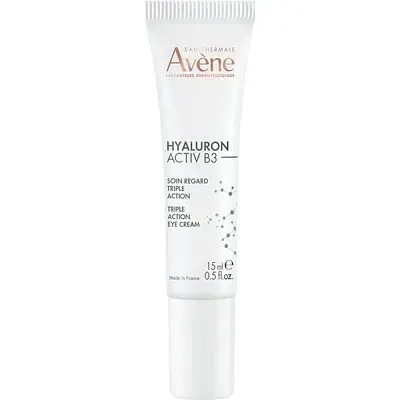
Avène Hyaluron Activ B3 Triple Action Eye Cream
Eye Moisturizersmoisturisers
Safety score
Pregnancy-focused assessment
No Known Risks99/100
Higher concernLower concern
No higher-risk ingredients were identified in MamaSkin's current assessment. Check the latest package before deciding.
Formula and assessment check
Ingredient safety review updated 23 November 2025. Product formulas can change, so compare the ingredients shown here with the packaging you have.
Report a formula mismatchIngredient breakdown
See how the listed formula falls across MamaSkin's pregnancy-focused risk bands.
24
No known risks
0
Low risk
0
Medium risk
0
High risk
Ingredients
Ingredients with a higher risk flag appear first, followed by the rest of the formula.
Caprylic/Capric Triglyceride
No Known RisksCommon emollient derived from fatty acids and glycerin. Used to soften skin and improve texture without pregnancy-specific concerns.
Sources: Cosmetic Ingredient Review (US); Scientific Committee on Consumer Safety (EU)
Glycerin
No Known RisksGlycerin is a widely used humectant that supports hydration and the skin barrier, with a long safety record and no known pregnancy or breastfeeding concerns in topical cosmetic use.
Sources: CIR; EU/UK Cosmetics Regulation
Show all (24)
Niacinamide
No Known RisksNiacinamide (vitamin B3) is widely used for barrier support and tone/texture benefits, and is generally considered safe in pregnancy and breastfeeding when used topically at cosmetic concentrations.
Sources: CIR; EU/UK Cosmetics Regulation
Dicaprylyl Ether
No Known RisksA lightweight fatty ether used as an emollient and spreading agent. Cosmetic safety reviewers concluded that dicaprylyl ether is safe in current cosmetic use; reviewed developmental testing did not identify maternal or fetal toxicity and skin absorption was low. Safety for airbrush delivery was not established.
Sources: CIR: Safety Assessment of Fatty Ethers https://www.cir-safety.org/sites/default/files/FR_FattyEthers_122022.pdf
Carthamus Tinctorius Seed Oil
No Known RisksThis plant-derived fatty oil or butter is used as an emollient and skin-conditioning ingredient. The Cosmetic Ingredient Review concluded that assessed plant-derived fatty acid oils are safe as used in cosmetics; individual plant allergy and ingredient purity remain practical considerations.
Sources: CIR: Safety Assessment of Plant-Derived Fatty Acid Oils https://cir-reports.cir-safety.org/view-attachment/?id=ad62ac6b-8e74-ec11-8943-0022482f06a6
Myristyl Alcohol
No Known RisksA long-chain fatty alcohol used as an emollient, thickener and stabiliser. This is not the same concern profile as volatile drying alcohols; cosmetic safety reviewers concluded that myristyl and related fatty alcohols are safe in current practices. Local irritation is uncommon but possible.
Sources: CIR: Final Report on the Safety Assessment of Cetearyl Alcohol, Cetyl Alcohol, Isostearyl Alcohol, Myristyl Alcohol and Behenyl Alcohol; December 2025 Quick Reference Table https://cir-safety.org/sites/default/files/QRT-Update-Dec2025.pdf
Sodium Dextran Sulfate
No Known Riskssodium dextran sulfate is a cosmetic formulation, mineral, sugar-derived or organic-acid ingredient. Available identity, use and related safety evidence did not identify a pregnancy-specific concern for normal topical cosmetic exposure. Cosmetic-grade purity and ordinary irritation precautions remain applicable.
Sources: CIR ingredient and related-family safety assessments; CIR Quick Reference Table https://www.cir-safety.org/supplementaldoc/quick-reference-table-december-2025; European Commission CosIng
Sodium Hyaluronate
No Known RisksSodium hyaluronate (hyaluronic acid salt) is used for hydration and cushioning, with very low systemic absorption from topical use and no known pregnancy or breastfeeding concerns at cosmetic concentrations.
Sources: CIR; EU/UK Cosmetics Regulation
Terminalia Chebula Fruit Extract
No Known RisksAdenosine
No Known RisksSkin-conditioning ingredient commonly used in leave-on skincare. Reviewed cosmetic safety sources support normal topical use, with no pregnancy- or breastfeeding-specific topical signal identified in the material reviewed.
Sources: CIR: Safety Assessment of Adenosine Ingredients as Used in Cosmetics; EU CosIng / cosmetics regulatory inventory
Cetearyl Olivate
No Known RisksEmollient ester/emulsifier used to improve skin feel and stabilise emulsions. Reviewed cosmetic safety sources support topical cosmetic use; the relevant practical caveat is formulation irritation potential rather than a pregnancy-specific concern.
Sources: CIR: Amended Safety Assessment of Alkyl Esters as Used in Cosmetics; CIR Quick Reference Table (Cetearyl Olivate); EU CosIng / cosmetics regulatory inventory
Citric Acid
No Known RiskspH adjuster used in small amounts to maintain product stability. Not associated with pregnancy-specific concerns.
Sources: Scientific Committee on Consumer Safety (EU); European cosmetics regulatory framework
Citrus Limon Peel Powder
No Known RisksGlyceryl Behenate
No Known RisksA glycerin fatty-acid ester used as an emollient, emulsifier or preservative-support ingredient. Cosmetic safety reviewers concluded that the assessed glyceryl esters are safe in current cosmetic practices.
Sources: CIR: Glyceryl ester conclusions; December 2025 Quick Reference Table https://cir-safety.org/sites/default/files/QRT-Update-Dec2025.pdf
Glyceryl Dibehenate
No Known Risksglyceryl dibehenate is a cosmetic emollient, ester or lipid-derived formulation aid. Related safety assessments support normal cosmetic use, with irritation and penetration-enhancement qualifications retained where relevant. No pregnancy-specific concern was identified for ordinary topical exposure.
Sources: CIR safety assessments of fatty alcohols, glyceryl triesters and related cosmetic lipids https://www.cir-safety.org/sites/default/files/triglycerides_0.pdf; European Commission CosIng
Helianthus Annuus Seed Oil
No Known RisksHelianthus annuus (sunflower) seed oil is a common emollient rich in fatty acids and is generally well tolerated, with no known pregnancy or breastfeeding concerns in topical cosmetic use.
Sources: CIR; EU/UK Cosmetics Regulation
Myristyl Glucoside
No Known RisksA surfactant, emulsifier or conditioning ingredient used at controlled cosmetic concentrations. Local irritation in strong formulas is the practical concern; no pregnancy-specific systemic or developmental hazard was identified for normal topical or rinse-off exposure.
Sources: European Commission CosIng ingredient inventory; relevant CIR assessments of surfactants, ethoxylated ingredients and quaternary conditioning agents.
Sclerotium Gum
No Known RisksMicrobial polysaccharide thickener used to build viscosity and form a soft film on skin. Reviewed cosmetic safety sources support normal topical use, with no pregnancy- or breastfeeding-specific topical signal identified in the material reviewed.
Sources: CIR: Safety Assessment of Microbial Polysaccharide Gums as Used in Cosmetics; EU CosIng / cosmetics regulatory inventory
Sodium Benzoate
No Known RisksPreservative widely used in foods and cosmetics. Considered safe at regulated concentrations with low systemic exposure from topical use.
Sources: Scientific Committee on Consumer Safety (EU); European cosmetics regulatory framework
Sorbitan Olivate
No Known RisksOlive-derived sorbitan ester used as an emulsifier and skin-conditioning ingredient. Reviewed cosmetic safety references do not identify a pregnancy- or breastfeeding-specific concern for normal topical use.
Sources: CIR: Safety Assessment of Sorbitan Esters as Used in Cosmetics; EU CosIng / cosmetics regulatory inventory
Tocopherol
No Known RisksVitamin E antioxidant used to protect oils and support the skin barrier. Not associated with pregnancy-specific concerns at cosmetic exposure.
Sources: Cosmetic Ingredient Review (US); Scientific Committee on Consumer Safety (EU)
Tocopheryl Glucoside
No Known Riskstocopheryl glucoside is a vitamin, vitamin derivative or endogenous cofactor used as a cosmetic conditioning or antioxidant ingredient. No pregnancy-specific concern was identified for normal topical cosmetic exposure. This classification does not extend to medicinal vitamin analogues, high-dose treatment or oral supplementation.
Sources: European Commission CosIng ingredient inventory; NIH Office of Dietary Supplements Vitamin D Fact Sheet https://ods.od.nih.gov/factsheets/VitaminD-HealthProfessional/; CIR vitamin and antioxidant ingredient assessments
Tribehenin
No Known RisksA triglyceride of behenic acid used as an emollient and structuring ingredient. Cosmetic safety reviewers assessed glyceryl triesters including tribehenin as safe in current cosmetic use, with no pregnancy- or breastfeeding-specific concern identified for normal topical exposure.
Sources: CIR: Final Report on Glyceryl Triesters https://cir-reports.cir-safety.org/view-attachment?id=315e3329-8e74-ec11-8943-0022482f06a6; CIR ingredient record: Tribehenin https://cir-safety.org/ingredient/tribehenin
Formulations can change without notice. For the most accurate result, compare this list with your packaging and scan the exact ingredient label in MamaSkin when you repurchase.
How to use this assessment
The risk band is the primary conclusion. The score adds detail within that band and should not be used to compare products as if a one-point difference were clinically meaningful.
MamaSkin provides pregnancy-focused information, not medical advice. Your midwife, GP, pharmacist or dermatologist should take priority when your circumstances differ from typical cosmetic use.