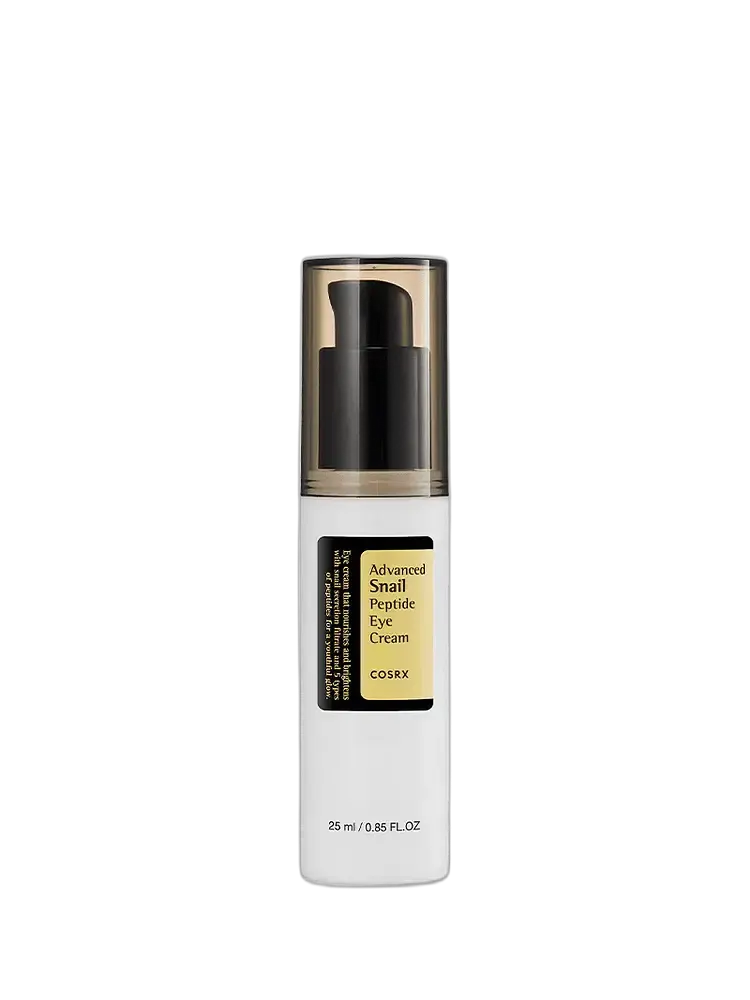
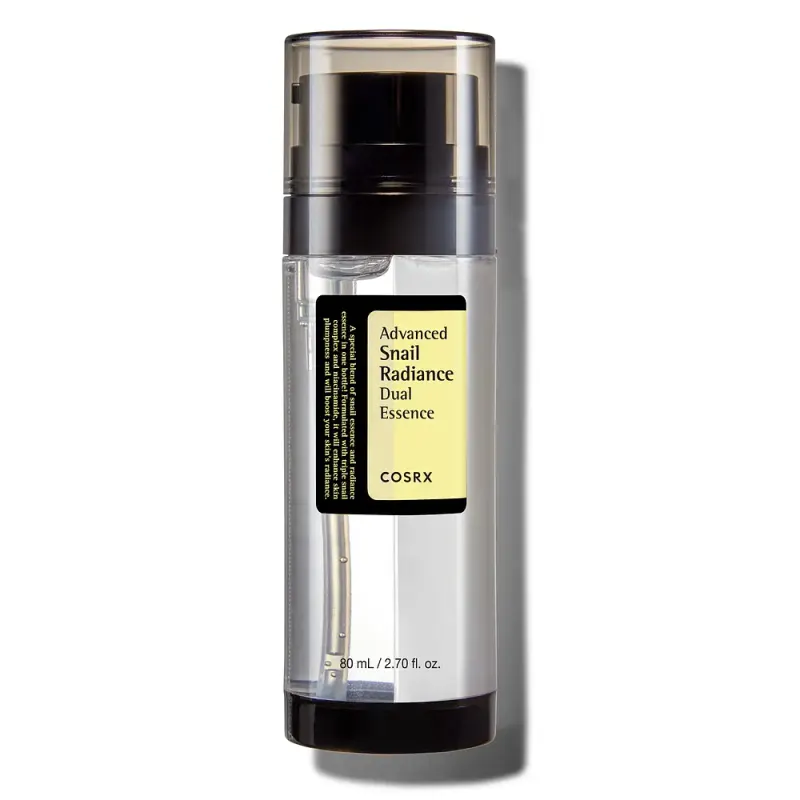
COSRX Advanced Snail Radiance Dual Essence by COSRX
COSRX

COSRX Advanced Snail Radiance Dual Essence

Essencestoners

Safety score

Pregnancy-focused assessment

No Known Risks99/100
Higher concernLower concern

No higher-risk ingredients were identified in MamaSkin's current assessment. Check the latest package before deciding.

Formula and assessment check

Ingredient safety review updated 24 November 2025. Product formulas can change, so compare the ingredients shown here with the packaging you have.

Report a formula mismatch

Ingredient breakdown

See how the listed formula falls across MamaSkin's pregnancy-focused risk bands.

22

No known risks

0

Low risk

0

Medium risk

0

High risk

Ingredients

Ingredients with a higher risk flag appear first, followed by the rest of the formula.

Snail Secretion Filtrate

No Known Risks

An animal-derived protein, peptide or secretion filtrate used for hydration and skin conditioning. These large components are expected to have low systemic absorption through intact skin. No pregnancy-specific hazard signal was identified for normal topical cosmetic use. Cosmetic-grade materials should be processed to control microorganisms, infectious agents and source-derived impurities, and protein allergy remains possible.

Sources: CIR: Safety Assessment of Skin and Connective Tissue-Derived Proteins and Peptides https://www.cir-safety.org/sites/default/files/tsupep092017final.pdf; European Commission CosIng ingredient inventory; peer-reviewed cosmetic literature on snail secretion filtrate.
Butylene Glycol

No Known Risks

Solvent and humectant commonly used in leave-on products. Not associated with pregnancy-specific concerns at cosmetic exposure levels.

Sources: Cosmetic Ingredient Review (US); Scientific Committee on Consumer Safety (EU)

Niacinamide

No Known Risks

Niacinamide (vitamin B3) is widely used for barrier support and tone/texture benefits, and is generally considered safe in pregnancy and breastfeeding when used topically at cosmetic concentrations.

Sources: CIR; EU/UK Cosmetics Regulation

Show all (22)

1,2-Hexanediol

No Known Risks

1,2-Hexanediol is commonly used as a solvent and preservative booster; topical exposure is low and it has no known pregnancy or breastfeeding concerns at cosmetic concentrations, though very sensitive skin may occasionally react.

Sources: CIR; EU/UK Cosmetics Regulation

Betaine

No Known Risks

Betaine is a humectant/osmolyte used to support hydration and reduce irritation potential in formulas; it is considered low concern with no known pregnancy or breastfeeding risks in topical cosmetic use.

Sources: CIR; EU/UK Cosmetics Regulation

Panthenol

No Known Risks

Panthenol (pro-vitamin B5) is used for soothing and barrier support and is generally well tolerated, with no known pregnancy or breastfeeding concerns in topical cosmetic use.

Sources: CIR; EU/UK Cosmetics Regulation

Water

No Known Risks

Glycerin

No Known Risks

Glycerin is a widely used humectant that supports hydration and the skin barrier, with a long safety record and no known pregnancy or breastfeeding concerns in topical cosmetic use.

Sources: CIR; EU/UK Cosmetics Regulation

Limnanthes Alba Seed Oil

No Known Risks

This plant-derived fatty oil or butter is used as an emollient and skin-conditioning ingredient. The Cosmetic Ingredient Review concluded that assessed plant-derived fatty acid oils are safe as used in cosmetics; individual plant allergy and ingredient purity remain practical considerations.

Sources: CIR: Safety Assessment of Plant-Derived Fatty Acid Oils https://cir-reports.cir-safety.org/view-attachment/?id=ad62ac6b-8e74-ec11-8943-0022482f06a6

Helianthus Annuus Seed Oil

No Known Risks

Helianthus annuus (sunflower) seed oil is a common emollient rich in fatty acids and is generally well tolerated, with no known pregnancy or breastfeeding concerns in topical cosmetic use.

Sources: CIR; EU/UK Cosmetics Regulation

Allantoin

No Known Risks

Allantoin is a soothing skin protectant commonly used to help reduce irritation and support comfort, with no known pregnancy or breastfeeding concerns in topical cosmetic use.

Sources: CIR; EU/UK Cosmetics Regulation

Carbomer

No Known Risks

Polymer thickener used to create gel textures. Large-molecule ingredient with negligible systemic absorption.

Sources: Cosmetic Ingredient Review (US); Scientific Committee on Consumer Safety (EU)

Macadamia Ternifolia Seed Oil

No Known Risks

This plant-derived fatty oil or butter is used as an emollient and skin-conditioning ingredient. The Cosmetic Ingredient Review concluded that assessed plant-derived fatty acid oils are safe as used in cosmetics; individual plant allergy and ingredient purity remain practical considerations.

Sources: CIR: Safety Assessment of Plant-Derived Fatty Acid Oils https://cir-reports.cir-safety.org/view-attachment/?id=ad62ac6b-8e74-ec11-8943-0022482f06a6

Sodium Polyacrylate

No Known Risks

Polymer used for texture and absorbency. Large-molecule ingredient with low systemic exposure.

Sources: Cosmetic Ingredient Review (US); Scientific Committee on Consumer Safety (EU)

Sodium Hyaluronate

No Known Risks

Sodium hyaluronate (hyaluronic acid salt) is used for hydration and cushioning, with very low systemic absorption from topical use and no known pregnancy or breastfeeding concerns at cosmetic concentrations.

Sources: CIR; EU/UK Cosmetics Regulation

Inulin Lauryl Carbamate

No Known Risks

A sugar, starch, inulin or cellulose derivative used for emulsification, film formation, absorbency or formula texture. These carbohydrate-based materials are not expected to produce meaningful systemic exposure through intact skin, and related cosmetic safety assessments do not identify a reproductive or developmental hazard for normal use. Fine dry powder should not be deliberately inhaled.

Sources: CIR safety assessments of Starches and Modified Starches, Cellulose and Cellulose Derivatives, Saccharide Esters and Plant Polysaccharide Gums; CIR December 2025 Quick Reference Table https://cir-safety.org/sites/default/files/QRT-Update-Dec2025.pdf; European Commission CosIng ingredient inventory.

Arginine

No Known Risks

Amino acid used as a humectant, skin-conditioning agent, and pH-adjusting support ingredient. Reviewed cosmetic safety sources support normal topical use, with no pregnancy- or breastfeeding-specific topical signal identified in the material reviewed.

Sources: CIR: Safety Assessment of α-Amino Acids as Used in Cosmetics; EU CosIng / cosmetics regulatory inventory

Argania Spinosa Kernel Oil

No Known Risks

Argan oil is a plant-derived emollient oil used for skin and hair conditioning. Normal topical cosmetic use has no known pregnancy- or breastfeeding-specific concern; users with plant/nut sensitivities should follow personal tolerance.

Sources: CIR: Safety Assessment of Plant-Derived Fatty Acid Oils as Used in Cosmetics; EU CosIng / cosmetics regulatory inventory

Xanthan Gum

No Known Risks

Natural polysaccharide thickener used for stability and texture. Not associated with pregnancy-specific concerns.

Sources: European cosmetics regulatory framework

Sodium Surfactin

No Known Risks

A surfactant or emulsifier used at controlled cosmetic concentrations. Local irritation in strong formulas is the practical concern; no pregnancy-specific systemic concern was identified for normal topical or rinse-off exposure.

Sources: CIR assessments of related surfactants and emulsifiers; European Commission CosIng.

Ethylhexylglycerin

No Known Risks

Preservative booster and skin-conditioning agent. Considered safe for cosmetic use with low systemic exposure when used as intended.

Sources: Scientific Committee on Consumer Safety (EU); Cosmetic Ingredient Review (US)

Glutathione

No Known Risks

An antioxidant peptide naturally present in the body and used in topical products for skin conditioning and tone. Clinical studies and systematic reviews report generally good tolerance of topical glutathione, although evidence for cosmetic benefits remains limited. No pregnancy-specific topical signal was identified.

Sources: PubMed: Systematic Review of the Efficacy and Safety of Topical Glutathione in Dermatology https://pubmed.ncbi.nlm.nih.gov/41416233/; PubMed: topical oxidized glutathione clinical trial https://pubmed.ncbi.nlm.nih.gov/25378941/

Formulations can change without notice. For the most accurate result, compare this list with your packaging and scan the exact ingredient label in MamaSkin when you repurchase.

How to use this assessment

The risk band is the primary conclusion. The score adds detail within that band and should not be used to compare products as if a one-point difference were clinically meaningful.

MamaSkin provides pregnancy-focused information, not medical advice. Your midwife, GP, pharmacist or dermatologist should take priority when your circumstances differ from typical cosmetic use.

Read the full methodology