
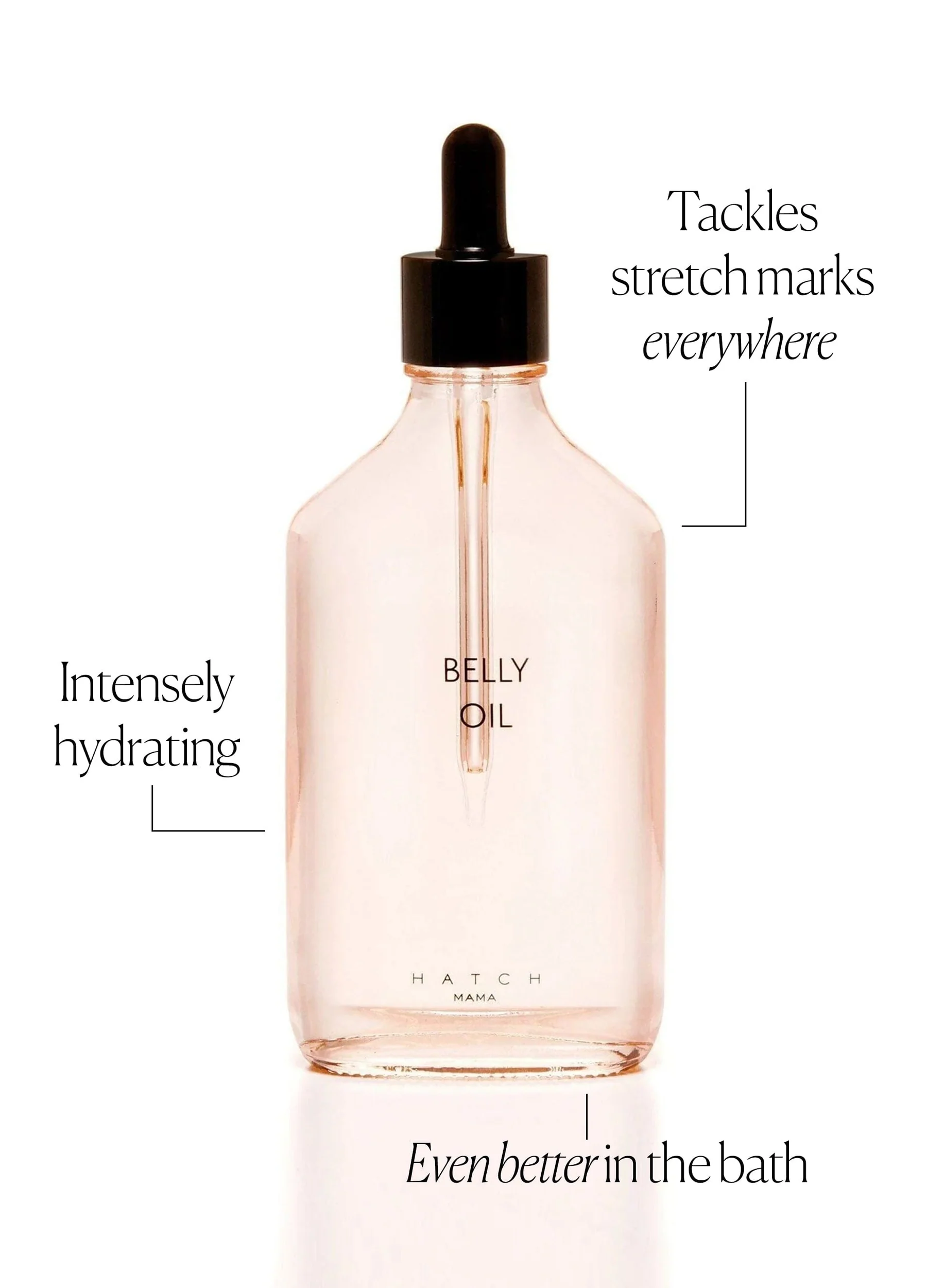
HATCH Belly Oil by HATCH
HATCH

HATCH Belly Oil

Body Care

Safety score

Pregnancy-focused assessment

No Known Risks99/100
Higher concernLower concern

No higher-risk ingredients were identified in MamaSkin's current assessment. Check the latest package before deciding.

Formula and assessment check

Ingredient safety review updated 18 January 2026. Product formulas can change, so compare the ingredients shown here with the packaging you have.

Report a formula mismatch

Ingredient breakdown

See how the listed formula falls across MamaSkin's pregnancy-focused risk bands.

15

No known risks

0

Low risk

0

Medium risk

0

High risk

Ingredients

Ingredients with a higher risk flag appear first, followed by the rest of the formula.

Isopropyl Myristate

No Known Risks

This emollient ester improves slip and skin feel. Cosmetic Ingredient Review assessments support use in current cosmetic concentrations when formulated to be non-irritating; topical use is not identified as a pregnancy- or breastfeeding-specific concern. Some alkyl esters can increase penetration of other formula ingredients.

Sources: CIR: Safety Assessment of Alkyl Esters as Used in Cosmetics https://cir-safety.org/supplementaldoc/safety-assessment-alkyl-esters-used-cosmetics
Simmondsia Chinensis (Jojoba) Seed Oil

No Known Risks

A liquid wax from jojoba seeds used as an emollient and conditioning ingredient. Cosmetic safety reviewers concluded that jojoba-derived ingredients, including jojoba seed oil or wax, are safe in current practices of use and concentration. No pregnancy-specific concern was identified for normal topical cosmetic exposure.

Sources: CIR: Final Report on the Safety Assessment of Jojoba Oil and Jojoba-Derived Ingredients https://cir-reports.cir-safety.org/view-attachment/?id=1f5fc8b6-8d74-ec11-8943-0022482f06a6

Hydrogenated Polyisobutene

No Known Risks

Inert synthetic emollient used as a glossing and occlusive agent. Reviewed cosmetic safety sources support normal topical use, with no pregnancy- or breastfeeding-specific topical signal identified in the material reviewed.

Sources: CIR: Safety Assessment of Polyene Group as Used in Cosmetics; EU CosIng / cosmetics regulatory inventory

Show all (15)

Argania Spinosa (Argan) Kernel Oil

No Known Risks

Argania Spinosa (Argan) Kernel Oil is a label variant for argan oil, a plant-derived emollient oil used for skin and hair conditioning. Normal topical cosmetic use has no known pregnancy- or breastfeeding-specific concern; users with plant/nut sensitivities should follow personal tolerance.

Sources: CIR: Safety Assessment of Plant-Derived Fatty Acid Oils as Used in Cosmetics; EU CosIng / cosmetics regulatory inventory

Olea Europaea (Olive) Fruit Oil

No Known Risks

Olea Europaea (Olive) Fruit Oil is a label variant for olive-derived emollient oil used for skin conditioning and barrier feel. Normal topical cosmetic use has no known pregnancy- or breastfeeding-specific concern identified in reviewed cosmetic references.

Sources: CIR: Safety Assessment of Plant-Derived Fatty Acid Oils as Used in Cosmetics; EU CosIng / cosmetics regulatory inventory

Raphanus Sativus (Radish) Seed Extract

No Known Risks

Citrus Paradisi (Grapefruit) Oil

No Known Risks

Tocopherol

No Known Risks

Vitamin E antioxidant used to protect oils and support the skin barrier. Not associated with pregnancy-specific concerns at cosmetic exposure.

Sources: Cosmetic Ingredient Review (US); Scientific Committee on Consumer Safety (EU)

Calendula Officinalis Flower Extract

No Known Risks

A flower extract used for skin conditioning and soothing. Cosmetic safety reviewers concluded that Calendula officinalis-derived ingredients, including the flower extract, are safe in current cosmetic practices of use and concentration. Available testing did not identify significant systemic, reproductive or developmental toxicity at cosmetic exposure, although botanical sensitivity remains possible. No pregnancy-specific topical contraindication was identified.

Sources: CIR: Amended Safety Assessment of Calendula officinalis-Derived Cosmetic Ingredients https://cir-reports.cir-safety.org/view-attachment/?id=a9ee6359-8e74-ec11-8943-0022482f06a6

Prunus Amygdalus Dulcis (Sweet Almond) Oil

No Known Risks

Prunus Amygdalus Dulcis (Sweet Almond) Oil is a label variant for sweet almond-derived emollient oil used for skin conditioning and barrier feel. Normal topical cosmetic use has no known pregnancy- or breastfeeding-specific concern; users with almond or nut sensitivities should follow personal tolerance.

Sources: CIR: Safety Assessment of Plant-Derived Fatty Acid Oils as Used in Cosmetics; EU CosIng / cosmetics regulatory inventory

Rosa Canina (Rosehip) Fruit Oil

No Known Risks

Diethylhexyl Syringylidenemalonate

No Known Risks

An oil-soluble antioxidant and formula stabiliser used to protect cosmetic oils from degradation. No reproductive or pregnancy-specific signal was identified for normal topical cosmetic exposure.

Sources: European Commission CosIng ingredient inventory; published safety and photostability literature for diethylhexyl syringylidenemalonate.

Rosmarinus Officinalis (Rosemary) Leaf Extract

No Known Risks

A rosemary leaf extract used mainly for skin conditioning and antioxidant support. Cosmetic safety reviewers concluded that rosemary leaf extract is safe at the reviewed cosmetic use levels when formulated to be non-sensitising. It is distinct from concentrated rosemary essential oil, and botanical allergy remains possible.

Sources: CIR: Safety Assessment of Rosmarinus officinalis (Rosemary)-Derived Ingredients as Used in Cosmetics https://www.cir-safety.org/sites/default/files/rosmarinus_2.pdf

Helianthus Annuus (Sunflower) Seed Oil

No Known Risks

A plant-derived fatty oil or butter used mainly as an emollient, conditioning ingredient or texture agent. Cosmetic safety reviewers concluded that the assessed plant-derived fatty acid oils are safe in current practices of use and concentration. This conclusion applies to cosmetic-grade fixed oils rather than similarly named volatile essential oils. Seed or food allergy may still matter for a susceptible person.

Sources: CIR: Safety Assessment of Plant-Derived Fatty Acid Oils as Used in Cosmetics https://cir-reports.cir-safety.org/view-attachment/?id=ad62ac6b-8e74-ec11-8943-0022482f06a6

Caprylic/Capric Triglyceride

No Known Risks

Common emollient derived from fatty acids and glycerin. Used to soften skin and improve texture without pregnancy-specific concerns.

Sources: Cosmetic Ingredient Review (US); Scientific Committee on Consumer Safety (EU)

Formulations can change without notice. For the most accurate result, compare this list with your packaging and scan the exact ingredient label in MamaSkin when you repurchase.

How to use this assessment

The risk band is the primary conclusion. The score adds detail within that band and should not be used to compare products as if a one-point difference were clinically meaningful.

MamaSkin provides pregnancy-focused information, not medical advice. Your midwife, GP, pharmacist or dermatologist should take priority when your circumstances differ from typical cosmetic use.

Read the full methodology