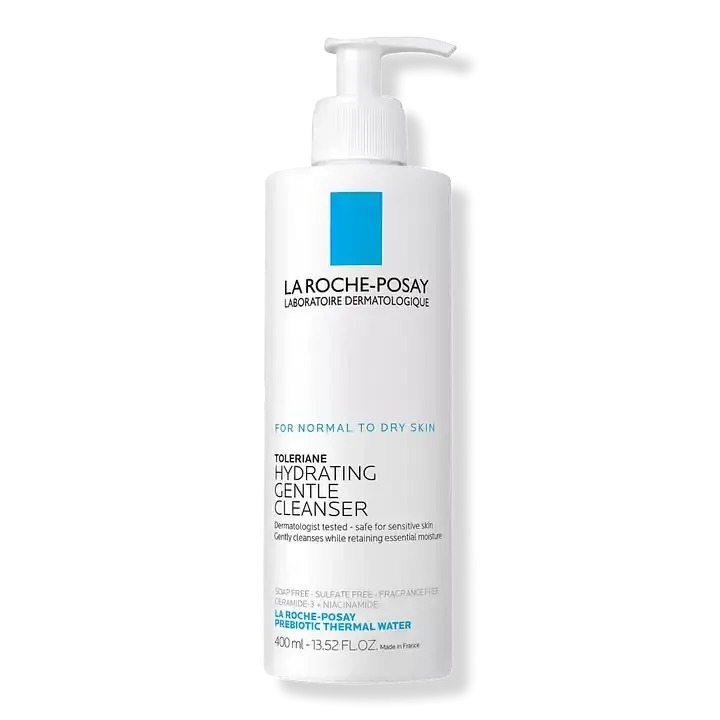
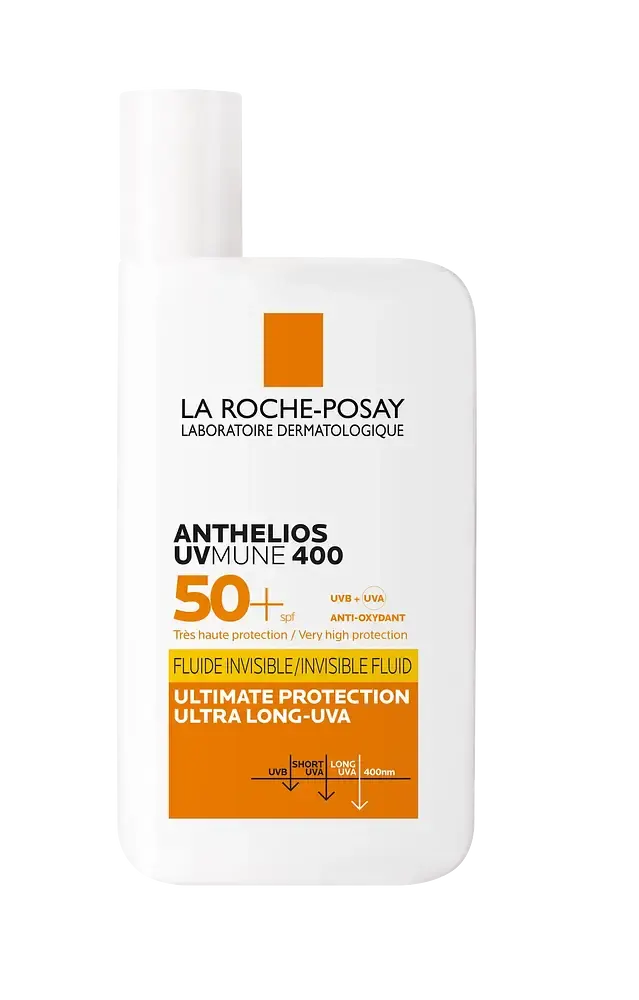
La Roche-Posay Anthelios Uvmune 400 Invisible Fluid SPF50+ by La Roche-Posay
La Roche-Posay

La Roche-Posay Anthelios Uvmune 400 Invisible Fluid SPF50+

Sunscreens

Safety score

Pregnancy-focused assessment

Medium Risk55/100
Higher concernLower concern

This formula contains an ingredient that needs extra caution in MamaSkin's pregnancy-focused assessment.

Formula and assessment check

Ingredient safety review updated 24 November 2025. Product formulas can change, so compare the ingredients shown here with the packaging you have.

Report a formula mismatch

Ingredient breakdown

See how the listed formula falls across MamaSkin's pregnancy-focused risk bands.

23

No known risks

2

Low risk

1

Medium risk

0

High risk

Ingredients

Ingredients with a higher risk flag appear first, followed by the rest of the formula.

Butyl Methoxydibenzoylmethane

Medium Risk

Butyl methoxydibenzoylmethane (avobenzone) is a UVA filter used in sunscreens. Reviews note potential endocrine-related signals for several organic UV filters, but data are often not sufficient to establish endocrine disruption, and systemic exposure depends on formulation and use pattern. Pregnancy-specific human outcome data for topical exposure are limited; the key signal is uncertainty around systemic/endocrine effects rather than a well-defined pregnancy outcome dataset.

Sources: TGA: Safety review of seven active sunscreen ingredients https://www.tga.gov.au/resources/publication/corporate-reports/safety-review-seven-active-sunscreen-ingredients
Ethylhexyl Salicylate

Low Risk

Ethylhexyl salicylate (octisalate) is an organic UV-B filter with measurable topical absorption. A CIR review records a rat oral reproductive/developmental study with dose-related post-implantation loss and smaller litters at 80 and 250 mg/kg/day (NOAEL 25 mg/kg/day); those repeated oral doses do not model intact-skin cosmetic exposure. The same review found relatively low human-skin permeability and concluded ethylhexyl salicylate safe in the assessed cosmetic uses. A ToxCast-to-human-exposure comparison found the most sensitive in-vitro endocrine response at about 16.5 micromolar versus about 0.023 micromolar maximal-use human plasma exposure, roughly 700-fold lower. FDA still requests additional sunscreen safety data, and pregnancy-outcome data are limited; MotherToBaby reports no proven increased pregnancy risk. MamaSkin therefore uses Low Risk to surface absorption and the evidence gap without treating remote high-dose animal findings as proof that typical topical use should be avoided.

Sources: CIR 2019 Final Report: Amended Safety Assessment of Salicylic Acid and Salicylates https://www.cir-safety.org/sites/default/files/salicy042019FAR.pdf, Toxicological Sciences 2023: ToxCast/Tox21 endocrine activity compared with human plasma exposure https://academic.oup.com/toxsci/article/196/1/25/7240499, FDA: OTC sunscreen proposed-order Q&A https://www.fda.gov/drugs/understanding-over-counter-medicines/questions-and-answers-fda-posts-deemed-final-order-and-proposed-order-over-counter-sunscreen, Matta et al. JAMA 2020 maximal-use sunscreen absorption trial https://jamanetwork.com/journals/jama/fullarticle/2759002, MotherToBaby: Screening Your Sunscreen During Pregnancy https://mothertobaby.org/baby-blog/screening-your-sunscreen-during-pregnancy/

Triethanolamine

Low Risk

Triethanolamine (TEA) is an alkanolamine used as a pH adjuster and surfactant in cosmetics. The main practical concerns are skin/eye irritation at higher concentrations and the potential formation of nitrosamines if formulated with nitrosating agents (a formulation/impurity-control issue). It is not a typical pregnancy-specific concern at cosmetic use levels; overall risk is primarily local irritation/sensitisation in susceptible users.

Sources: CIR: Triethanolamine ingredient safety information https://www.cir-safety.org/ingredient/triethanolamine

Show all (26)

Water

No Known Risks

Alcohol Denat.

No Known Risks

Volatile solvent used to improve texture, drying time, and penetration in some formulas. Reviewed cosmetic safety sources support current cosmetic use, with no pregnancy- or breastfeeding-specific topical concern identified in the material reviewed; the main practical issue is dryness, stinging, or barrier disruption in some users.

Sources: CIR: Safety Assessment of SD Alcohol 40, Benzyl Alcohol, and Denatured Alcohol in Cosmetic Products; EU CosIng / cosmetics regulatory inventory

Triethyl Citrate

No Known Risks

An ester of citric acid and ethanol used as a solvent, deodorant ingredient and fragrance carrier. Cosmetic safety reviewers assessed triethyl citrate with citric acid, citrate salts and alkyl citrate esters and concluded that the group is safe in current cosmetic use when formulated to avoid irritation. Triethyl citrate is also an established food-use substance, and no pregnancy-specific concern is identified for normal topical cosmetic exposure.

Sources: CIR: Safety Assessment of Citric Acid, Inorganic Citrate Salts, and Alkyl Citrate Esters https://pubmed.ncbi.nlm.nih.gov/24861367/

Diisopropyl Sebacate

No Known Risks

An ester of a dicarboxylic acid used as an emollient, solvent or texture agent. Cosmetic safety reviewers concluded that the assessed alkyl dicarboxylic acid esters are safe in current practices of use and concentration. No pregnancy-specific concern was identified for normal topical exposure.

Sources: CIR: Safety Assessment of Alkyl Dicarboxylic Acid Esters as Used in Cosmetics https://cir-reports.cir-safety.org/view-attachment/?id=d8d3785f-8e74-ec11-8943-0022482f06a6

Silica

No Known Risks

Mineral absorbent and texture aid used to mattify and improve slip. Reviewed cosmetic safety sources support normal topical cosmetic use; this assessment does not cover deliberate inhalation of loose powder.

Sources: CIR: Safety Assessment of Silica and Silicates as Used in Cosmetics; EU CosIng / cosmetics regulatory inventory

Bis-Ethylhexyloxyphenol Methoxyphenyl Triazine

No Known Risks

Modern broad-spectrum UV filter (often known as Tinosorb S). It has a high molecular weight and is formulated to remain mainly in the outer skin layers, with very low systemic absorption at cosmetic use levels. EU regulatory assessments and independent risk–benefit reviews have evaluated this filter as safe up to 10% in sunscreens, with no specific reproductive or developmental toxicity signals identified in animals or humans at permitted concentrations.

Sources: European Union Cosmetic Products Regulation (Annex VI): Bis-Ethylhexyloxyphenol Methoxyphenyl Triazine listed as an approved UV filter up to 10% in cosmetic products. Mikkelsen SH et al. “Survey and health assessment of UV filters” – Danish EPA, 2015: includes Bis-Ethylhexyloxyphenol Methoxyphenyl Triazine and notes low systemic exposure at approved use levels.

Ethylhexyl Triazone

No Known Risks

UV filter used in sunscreens and day products to help absorb UVB radiation. Reviewed cosmetic safety and regulatory sources support current cosmetic use within applicable concentration limits, with no pregnancy- or breastfeeding-specific topical concern identified in the material reviewed.

Sources: EU CosIng Annex VI / UV filters; EU scientific opinion on Ethylhexyl Triazone (Uvinul T 150)

Glycerin

No Known Risks

Glycerin is a widely used humectant that supports hydration and the skin barrier, with a long safety record and no known pregnancy or breastfeeding concerns in topical cosmetic use.

Sources: CIR; EU/UK Cosmetics Regulation

Propanediol

No Known Risks

Solvent and humectant used to improve texture and ingredient solubility. Low systemic exposure expected from topical cosmetic use.

Sources: Cosmetic Ingredient Review (US); Scientific Committee on Consumer Safety (EU)

C12-22 Alkyl Acrylate/Hydroxyethylacrylate Copolymer

No Known Risks

C12 22 Alkyl Acrylate/hydroxyethylacrylate Copolymer is a cosmetic polymer, film former or high-molecular-weight texture aid. Systemic dermal absorption is expected to be limited when manufactured with appropriate residual-monomer and impurity controls. No pregnancy-specific concern was identified for normal cosmetic use; avoid inhaling airborne powder or spray droplets.

Sources: CIR polymer safety assessments and Quick Reference Table https://www.cir-safety.org/supplementaldoc/quick-reference-table-december-2025; European Commission CosIng ingredient inventory

Sodium Citrate

No Known Risks

Buffering and chelating ingredient used to control pH and formulation stability. Reviewed cosmetic safety sources support normal topical use, with no pregnancy- or breastfeeding-specific topical signal identified in the material reviewed.

Sources: CIR: Safety Assessment of Citric Acid, Inorganic Citrate Salts, and Alkyl Citrate Esters as Used in Cosmetics; EU CosIng / cosmetics regulatory inventory

Methoxypropylamino Cyclohexenylidene Ethoxyethylcyanoacetate

No Known Risks

Perlite

No Known Risks

An insoluble mineral or elemental particle used for optical effects, absorbency or cosmetic texture. Meaningful systemic exposure through intact skin is expected to be low. No pregnancy- or reproductive-toxicity signal was identified for normal topical cosmetic use. Particle size, source purity, metal impurities and inhalation of airborne powder remain formulation-specific considerations, and local contact allergy is possible with gold.

Sources: European Commission CosIng ingredient inventory; SCCS guidance on the safety assessment of nanomaterials in cosmetics https://health.ec.europa.eu/scientific-committees/scientific-committee-consumer-safety-sccs_en; published cosmetic and dermatology literature for gold, diamond powder and perlite.

Tocopherol

No Known Risks

Vitamin E antioxidant used to protect oils and support the skin barrier. Not associated with pregnancy-specific concerns at cosmetic exposure.

Sources: Cosmetic Ingredient Review (US); Scientific Committee on Consumer Safety (EU)

Caprylic/Capric Triglyceride

No Known Risks

Common emollient derived from fatty acids and glycerin. Used to soften skin and improve texture without pregnancy-specific concerns.

Sources: Cosmetic Ingredient Review (US); Scientific Committee on Consumer Safety (EU)

Acrylates/C10-30 Alkyl Acrylate Crosspolymer

No Known Risks

Polymer thickener and stabiliser used in creams and sunscreens. Low systemic exposure expected.

Sources: Cosmetic Ingredient Review (US); Scientific Committee on Consumer Safety (EU)

Caprylyl Glycol

No Known Risks

Humectant and preservative booster used to support product stability. Low systemic exposure expected from topical cosmetic use.

Sources: Scientific Committee on Consumer Safety (EU); Cosmetic Ingredient Review (US)

Citric Acid

No Known Risks

pH adjuster used in small amounts to maintain product stability. Not associated with pregnancy-specific concerns.

Sources: Scientific Committee on Consumer Safety (EU); European cosmetics regulatory framework

Diethylamino Hydroxybenzoyl Hexyl Benzoate

No Known Risks

Modern UVA filter (often called Uvinul A+ or DHHB). Regulatory assessments have repeatedly evaluated this filter as safe in cosmetic products at concentrations up to 10%. The most recent SCCS advice focuses on controlling a manufacturing impurity (DnHexP) rather than on new toxicity of DHHB itself. Human biomonitoring data indicate low systemic exposure from normal sunscreen use, and current reviews do not identify specific reproductive or developmental toxicity signals at approved concentrations.

Sources: SCCP opinion referenced in Directive 2008/123/EC: concludes that Diethylamino Hydroxybenzoyl Hexyl Benzoate used at a maximum of 10% in cosmetic (including sunscreen) products does not pose a risk to the consumer. Regulatory summaries (e.g. CosLaw and CIRS Group updates, 2025) reviewing the SCCS DHHB opinion and reiterating that DHHB remains permitted up to 10% in EU cosmetics when impurity limits are respected.

Drometrizole Trisiloxane

No Known Risks

Organic UVA/UVB filter used in sunscreens, also known as Mexoryl XL. Cosmetic safety and regulatory sources support use within applicable concentration limits, with no pregnancy- or breastfeeding-specific topical concern identified in the sources reviewed.

Sources: EU CosIng Annex VI / UV filters; SCCS / European Commission cosmetic UV filter safety assessments; PubMed

Hydroxyethylcellulose

No Known Risks

Cellulose-derived thickener used to build viscosity and improve texture. Reviewed cosmetic safety sources support normal topical use, with no pregnancy- or breastfeeding-specific topical signal identified in the material reviewed.

Sources: CIR Quick Reference Table / ingredient status (Hydroxyethylcellulose, Final Report 03/2009); EU CosIng / cosmetics regulatory inventory

Terephthalylidene Dicamphor Sulfonic Acid

No Known Risks

Organic UVA filter used in sunscreens, also known as Ecamsule or Mexoryl SX. Cosmetic safety and regulatory sources support use within applicable concentration limits, with no pregnancy- or breastfeeding-specific topical concern identified in the sources reviewed.

Sources: EU CosIng Annex VI / UV filters; SCCS / European Commission cosmetic UV filter safety assessments; PubMed

Trisodium Ethylenediamine Disuccinate

No Known Risks

Chelating ingredient used to improve formula stability by binding trace metals. Reviewed cosmetic ingredient references do not identify a pregnancy- or breastfeeding-specific concern for normal topical use.

Sources: CIR cosmetic ingredient safety references for chelating agents; EU CosIng / cosmetics regulatory inventory

Formulations can change without notice. For the most accurate result, compare this list with your packaging and scan the exact ingredient label in MamaSkin when you repurchase.

How to use this assessment

The risk band is the primary conclusion. The score adds detail within that band and should not be used to compare products as if a one-point difference were clinically meaningful.

MamaSkin provides pregnancy-focused information, not medical advice. Your midwife, GP, pharmacist or dermatologist should take priority when your circumstances differ from typical cosmetic use.

Read the full methodology