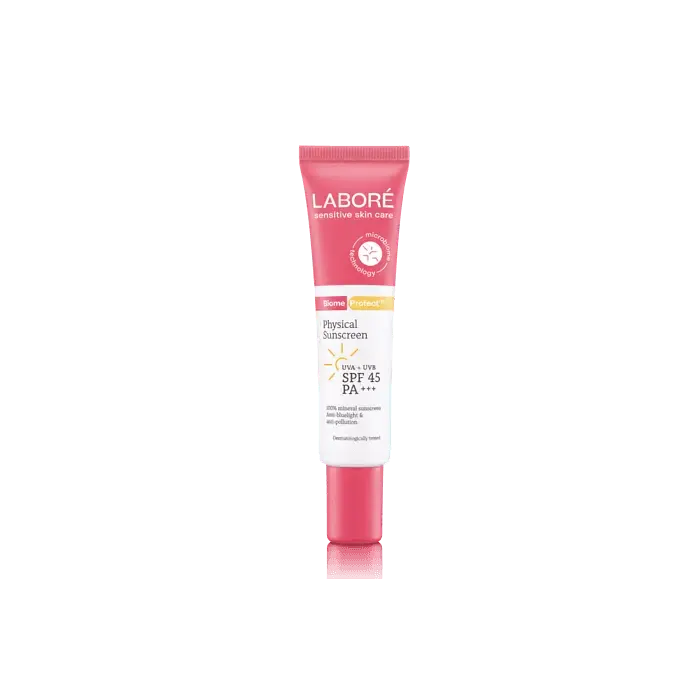
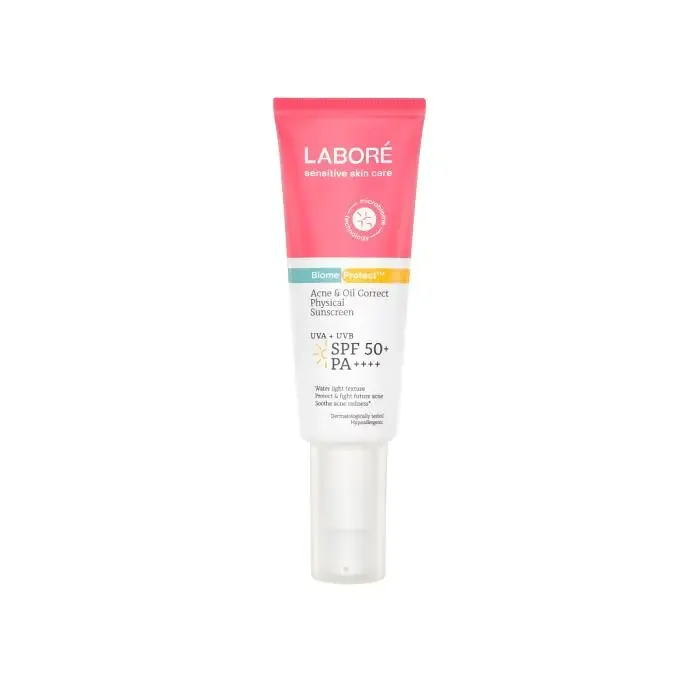
Labore
Labore Acne & Oil Correct Physical Sunscreen SPF 50+
Sunscreens
Safety score
Pregnancy-focused assessment
No Known Risks99/100
Higher concernLower concern
No higher-risk ingredients were identified in MamaSkin's current assessment. Check the latest package before deciding.
Formula and assessment check
Ingredient safety review updated 24 November 2025. Product formulas can change, so compare the ingredients shown here with the packaging you have.
Report a formula mismatchIngredient breakdown
See how the listed formula falls across MamaSkin's pregnancy-focused risk bands.
30
No known risks
0
Low risk
0
Medium risk
0
High risk
Ingredients
Ingredients with a higher risk flag appear first, followed by the rest of the formula.
Zinc Oxide
No Known RisksMineral ingredient used as a UV filter and skin protectant in many creams and mineral sunscreens. For typical topical use, systemic absorption is very low and it is generally considered acceptable in pregnancy and breastfeeding. If you prefer a cautious approach, avoid inhaling loose powders or spray formats.
Sources: General dermatology/obstetric guidance commonly lists mineral sunscreens (zinc oxide) as acceptable in pregnancy; exposure route considerations for powders/sprays.
C12-15 Alkyl Benzoate
No Known RisksAlkyl benzoate emollient used in cosmetics; available cosmetic safety assessments do not indicate pregnancy-specific concerns with routine topical use.
Sources: CIR Safety Assessment of Alkyl Benzoates (2012); CIR alkyl benzoates dossier / C12-15 alkyl benzoate data.
Show all (30)
C14-22 Alcohols
No Known RisksA long-chain fatty alcohol or fatty-alcohol blend used as an emollient, emulsifier or thickener. Cosmetic safety assessments of long-chain fatty alcohols support use in current cosmetic practices; systemic absorption and reproductive exposure from normal topical use are expected to be low.
Sources: CIR: Safety Assessment of Fatty Alcohols as Used in Cosmetics; CIR December 2025 Quick Reference Table https://cir-safety.org/sites/default/files/QRT-Update-Dec2025.pdf
Propanediol
No Known RisksSolvent and humectant used to improve texture and ingredient solubility. Low systemic exposure expected from topical cosmetic use.
Sources: Cosmetic Ingredient Review (US); Scientific Committee on Consumer Safety (EU)
Hydroxyethyl Acrylate/Sodium Acryloyldimethyl Taurate Copolymer
No Known RisksLarge polymer thickener, stabilizer and texture ingredient used in gels, creams and sunscreens. Systemic exposure from topical cosmetic use is expected to be low, with no pregnancy- or breastfeeding-specific concern identified in reviewed cosmetic references.
Sources: CIR cosmetic ingredient safety references for acrylates copolymers; EU CosIng / cosmetics regulatory inventory
Bisabolol
No Known RisksA terpene alcohol used for skin conditioning and soothing. Cosmetic safety reviewers reaffirmed bisabolol as safe at current cosmetic concentrations, and reproductive and developmental testing did not identify adverse effects. Bisabolol can increase skin penetration, so formulators should consider the safety of other ingredients in the same product.
Sources: CIR: Final Report on the Safety Assessment of Bisabolol https://cir-reports.cir-safety.org/view-attachment/?id=6fcf160b-8e74-ec11-8943-0022482f06a6; CIR re-review material https://www.cir-safety.org/sites/default/files/bisabolol.pdf
C12-20 Alkyl Glucoside
No Known RisksA sugar-derived surfactant and emulsifier. Cosmetic safety reviewers concluded that alkyl glucosides, including C12-20 alkyl glucoside, are safe in current practices when formulated to be non-irritating.
Sources: CIR: Alkyl Glucosides conclusion, IJT 32(Suppl. 3), 2013; December 2025 Quick Reference Table https://cir-safety.org/sites/default/files/QRT-Update-Dec2025.pdf
Glycerin
No Known RisksGlycerin is a widely used humectant that supports hydration and the skin barrier, with a long safety record and no known pregnancy or breastfeeding concerns in topical cosmetic use.
Sources: CIR; EU/UK Cosmetics Regulation
1,2-Hexanediol
No Known Risks1,2-Hexanediol is commonly used as a solvent and preservative booster; topical exposure is low and it has no known pregnancy or breastfeeding concerns at cosmetic concentrations, though very sensitive skin may occasionally react.
Sources: CIR; EU/UK Cosmetics Regulation
Triethoxycaprylylsilane
No Known RisksSilane coating and dispersion aid used on pigments and mineral particles. Reviewed cosmetic safety sources support normal topical use, with no pregnancy- or breastfeeding-specific topical signal identified in the material reviewed.
Sources: CIR: Safety Assessment of Alkoxyl Alkyl Silanes as Used in Cosmetics; EU CosIng / cosmetics regulatory inventory
Polyacrylate Crosspolymer-6
No Known RisksLarge polymer thickener and stabilizer used in gels, serums and creams. Systemic exposure from topical cosmetic use is expected to be low, with no pregnancy- or breastfeeding-specific concern identified in reviewed cosmetic references.
Sources: CIR cosmetic ingredient safety references for acrylates/polyacrylate crosspolymers; EU CosIng / cosmetics regulatory inventory
Allantoin
No Known RisksAllantoin is a soothing skin protectant commonly used to help reduce irritation and support comfort, with no known pregnancy or breastfeeding concerns in topical cosmetic use.
Sources: CIR; EU/UK Cosmetics Regulation
Chlorphenesin
No Known RisksPreservative used to help protect formulas from microbial growth. Reviewed cosmetic safety sources support present cosmetic use; no pregnancy- or breastfeeding-specific topical concern was identified in the material reviewed, although some users may still notice local irritation or sensitivity.
Sources: CIR: Safety Assessment of Chlorphenesin as Used in Cosmetics; EU CosIng / cosmetics regulatory inventory
Polyhydroxystearic Acid
No Known RisksPolymeric dispersing agent used to keep pigments and mineral filters evenly suspended. Low systemic exposure is expected from topical cosmetic use, with no pregnancy- or breastfeeding-specific concern identified.
Sources: CIR cosmetic ingredient safety references for polymeric fatty acid derivatives; EU CosIng / cosmetics regulatory inventory
Butylene Glycol
No Known RisksSolvent and humectant commonly used in leave-on products. Not associated with pregnancy-specific concerns at cosmetic exposure levels.
Sources: Cosmetic Ingredient Review (US); Scientific Committee on Consumer Safety (EU)
Silica
No Known RisksMineral absorbent and texture aid used to mattify and improve slip. Reviewed cosmetic safety sources support normal topical cosmetic use; this assessment does not cover deliberate inhalation of loose powder.
Sources: CIR: Safety Assessment of Silica and Silicates as Used in Cosmetics; EU CosIng / cosmetics regulatory inventory
Dibutyl Adipate
No Known RisksA diester used as an emollient, solvent and plasticizer. After reviewing additional dermal, reproductive, developmental and genotoxicity data, cosmetic safety reviewers concluded that dibutyl adipate is safe in current cosmetic use and concentration. No pregnancy-specific concern is identified for normal topical cosmetic exposure.
Sources: CIR: Amended Final Report of the Safety Assessment of Dibutyl Adipate https://cir-reports.cir-safety.org/view-attachment?id=f1624b41-8e74-ec11-8943-0022482f06a6
Madecassoside
No Known RisksA triterpene glycoside associated with Centella asiatica and used in soothing and skin-conditioning formulas. Pregnancy-specific evidence for isolated topical madecassoside is limited. Cosmetic safety reviewers considered Centella-derived ingredients acceptable at current cosmetic exposure but noted that madecassoside and related triterpenes may contribute to sensitisation, so products should be formulated to avoid sensitising concentrations. No pregnancy-specific topical contraindication was identified in the reviewed material.
Sources: CIR: Safety Assessment of Centella asiatica-Derived Ingredients as Used in Cosmetics https://cir-safety.org/supplementaldoc/safety-assessment-centella-asiatica-derived-ingredients-used-cosmetics-1
Bacillus Lysate
No Known RisksCaprylhydroxamic Acid
No Known RisksA chelating ingredient commonly used to support cosmetic preservation. Cosmetic safety reviewers concluded that caprylhydroxamic acid is safe in current cosmetic use; sensitisation and enhanced penetration are formulation considerations, especially on damaged skin, but no pregnancy-specific contraindication is identified for normal topical use.
Sources: CIR: Safety Assessment of Caprylhydroxamic Acid https://www.cir-safety.org/supplementaldoc/safety-assessment-caprylhydroxamic-acid-used-cosmetics
Aminomethyl Propanol
No Known RisksAn alkanolamine used mainly to adjust product pH. Cosmetic safety reviewers concluded that aminomethyl propanol is safe in current cosmetic use at the reviewed concentrations. Formulators should control secondary-amine impurities and should not combine it with nitrosating agents. No pregnancy-specific concern is identified for normal use of a properly formulated finished cosmetic.
Sources: CIR: Final Amended Report on the Safety Assessment of Aminomethyl Propanol and Aminomethyl Propanediol https://cir-reports.cir-safety.org/view-attachment/?id=62ee6359-8e74-ec11-8943-0022482f06a6
Maltodextrin
No Known RisksPolysaccharide carrier and bulking agent used for texture and delivery support. Reviewed cosmetic safety sources support normal topical use, with no pregnancy- or breastfeeding-specific topical signal identified in the material reviewed.
Sources: CIR: Safety Assessment of Polysaccharide Gums as Used in Cosmetics; EU CosIng / cosmetics regulatory inventory
Chlorophyllin-Copper Complex
No Known Riskschlorophyllin-copper complex is a cosmetic formulation or conditioning ingredient. Available identity, use and related safety evidence did not identify a pregnancy-specific concern for normal topical cosmetic exposure. This classification does not remove ordinary irritation or sensitivity precautions.
Sources: CIR ingredient and related-family assessments; European Commission CosIng; ECHA substance information where applicable
Glucose
No Known RisksSimple sugar used as a humectant and skin-conditioning support ingredient. Reviewed cosmetic ingredient references do not identify a pregnancy- or breastfeeding-specific concern for normal topical cosmetic use.
Sources: CIR: Safety Assessment of Monosaccharides, Disaccharides, and Related Ingredients as Used in Cosmetics; EU CosIng / cosmetics regulatory inventory
Vitis Vinifera Leaf Extract
No Known Risksvitis vinifera leaf extract is a botanical-derived cosmetic conditioning ingredient. The reviewed identity is not a concentrated essential oil or an oral herbal preparation. Available cosmetic evidence and expected topical exposure did not identify a pregnancy-specific contraindication, although botanical irritation or allergy remains possible.
Sources: CIR ingredient-specific and botanical-family safety assessments; CIR Quick Reference Table https://www.cir-safety.org/supplementaldoc/quick-reference-table-december-2025; European Commission CosIng
Lactobacillus Ferment
No Known RisksFerment-derived skin-conditioning ingredient used in microbiome-support and soothing formulas. Reviewed cosmetic safety sources support current cosmetic use, with no pregnancy- or breastfeeding-specific topical concern identified in the material reviewed.
Sources: CIR: Safety Assessment of Lactobacillus Ferment Ingredients as Used in Cosmetics; EU CosIng / cosmetics regulatory inventory
Palmitoyl Pentapeptide-4
No Known RisksSynthetic palmitoylated signal peptide used in topical anti-aging cosmetics. It is one of the better-studied cosmetic peptides, with reviewed topical literature describing controlled cosmetic studies and no pregnancy- or breastfeeding-specific concern for normal topical cosmetic use.
Sources: Schagen SK. Topical Peptide Treatments with Effective Anti-Aging Results. Cosmetics. 2017;4(2):16. doi:10.3390/cosmetics4020016; Robinson LR et al. Topical palmitoyl pentapeptide provides improvement in photoaged human facial skin. Int J Cosmet Sci. 2005;27(3):155-160.
Actinidia Polygama Fruit Extract
No Known RisksCamellia Sinensis Leaf Extract
No Known RisksCamellia sinensis (green tea) leaf extract is used as an antioxidant botanical; topical cosmetic use is considered low concern with no known pregnancy or breastfeeding risks, though rare sensitivities are possible.
Sources: CIR; EU/UK Cosmetics Regulation
Formulations can change without notice. For the most accurate result, compare this list with your packaging and scan the exact ingredient label in MamaSkin when you repurchase.
How to use this assessment
The risk band is the primary conclusion. The score adds detail within that band and should not be used to compare products as if a one-point difference were clinically meaningful.
MamaSkin provides pregnancy-focused information, not medical advice. Your midwife, GP, pharmacist or dermatologist should take priority when your circumstances differ from typical cosmetic use.