
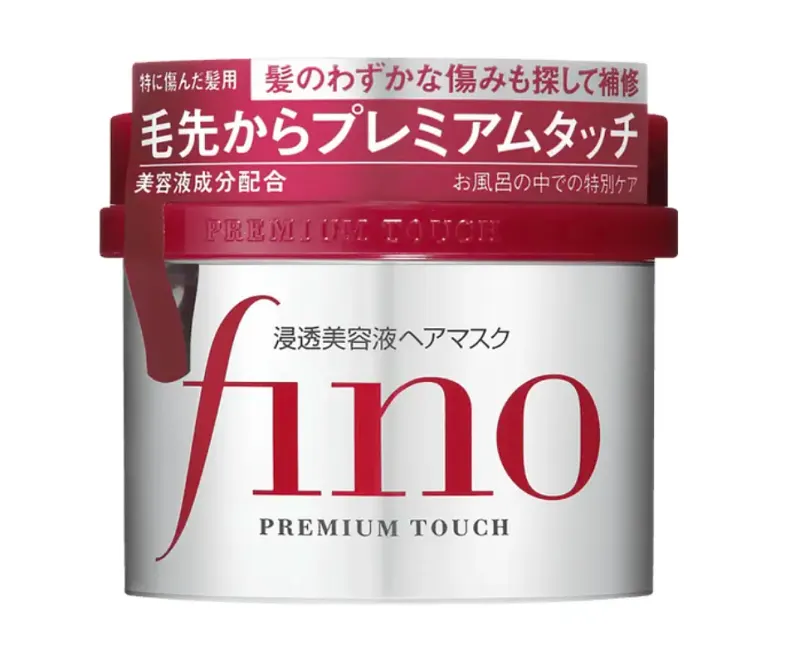
Shiseido Fino Premium Touch Hair Mask by Shiseido
Shiseido

Shiseido Fino Premium Touch Hair Mask

Hair Maskshair care

Safety score

Pregnancy-focused assessment

Low Risk72/100
Higher concernLower concern

One or more ingredients have a low-risk flag in MamaSkin's current assessment. Review the notes and your own circumstances.

Formula and assessment check

Ingredient safety review updated 24 November 2025. Product formulas can change, so compare the ingredients shown here with the packaging you have.

Report a formula mismatch

Ingredient breakdown

See how the listed formula falls across MamaSkin's pregnancy-focused risk bands.

27

No known risks

4

Low risk

0

Medium risk

0

High risk

Ingredients

Ingredients with a higher risk flag appear first, followed by the rest of the formula.

Phenoxyethanol

Low Risk

Phenoxyethanol is a preservative permitted in EU cosmetics up to 1.0%. The SCCS concluded it is safe for cosmetic use at that level, including when considering higher cosmetic exposure scenarios in infants and young children. Main practical concern is irritation/stinging on very sensitive or compromised skin rather than a pregnancy- or breastfeeding-specific risk.

Sources: SCCS/1575/16: Phenoxyethanol opinion https://health.ec.europa.eu/publications/phenoxyethanol_en

Parfum

Low Risk

Umbrella term for an undisclosed fragrance blend. It’s not usually a pregnancy-specific concern at normal cosmetic use levels, but the exact components and concentrations aren’t fully disclosed on the label, so we score it more conservatively. If you prefer maximum transparency (or you’re sensitive to fragrance compounds), choose fragrance-free/unscented products.

Sources: SCCS: Fragrance allergens in cosmetic products https://health.ec.europa.eu/latest-updates/sccs-new-opinion-fragrance-allergens-cosmetic-products-2012-07-31_en

Dimethicone

Low Risk

Dimethicone is a silicone polymer used as a skin protectant and slip/conditioning agent. It is considered inert with minimal dermal absorption; the main practical issues are cosmetic (feel) and occasional irritation in very sensitive users. It is not a pregnancy-specific concern in topical cosmetic use.

Sources: CIR: Amended Safety Assessment of Dimethicone, Methicone, and Substituted-Methicone Polymers as Used in Cosmetics https://cir-safety.org/supplementaldoc/amended-safety-assessment-dimethicone-methicone-and-substituted-methicone-polymers-2

Show all (31)

Amodimethicone

Low Risk

This ingredient is a silicone polymer included in CIR's dimethicone, methicone and substituted-methicone family assessment. CIR concluded the reviewed ingredients safe as used when formulated to be non-irritating to skin and eyes. This is family-level cosmetic evidence, not ingredient-specific human pregnancy evidence for every derivative. MamaSkin therefore retains Low Risk without claiming negligible absorption for this individual ingredient.

Sources: CIR: Amended safety assessment of dimethicone and related methicone polymers https://cir-safety.org/supplementaldoc/amended-safety-assessment-dimethicone-methicone-and-substituted-methicone-polymers-2

Water

No Known Risks

Sorbitol

No Known Risks

Sugar alcohol humectant used to help maintain water content at the skin surface. Reviewed cosmetic safety sources support normal topical use, with no pregnancy- or breastfeeding-specific topical signal identified in the material reviewed.

Sources: CIR: Safety Assessment of Mannitol, Sorbitol, and Xylitol as Used in Cosmetics; EU CosIng / cosmetics regulatory inventory

Hydrogenated Rapeseed Oil

No Known Risks

A plant-derived fixed oil or lipid used as an emollient and skin-conditioning ingredient. Cosmetic safety review focuses on oxidation, irritation, impurities and source allergy; no pregnancy-specific reproductive or developmental hazard was identified for normal topical exposure.

Sources: CIR: Safety Assessment of Plant-Derived Fatty Acid Oils as Used in Cosmetics; European Commission CosIng ingredient inventory.

Isopentyldiol

No Known Risks

A small alkane diol used as a solvent, humectant and preservative-support ingredient. Cosmetic safety reviewers concluded that alkane diols, including isopentyldiol, are safe in current practices of use and concentration. No pregnancy-specific concern was identified for normal topical cosmetic exposure.

Sources: CIR: Safety Assessment of Alkane Diols as Used in Cosmetics https://www.cir-safety.org/sites/default/files/ADIOLS062016rep.pdf

Behentrimonium Chloride

No Known Risks

A quaternary ammonium conditioning and anti-static ingredient used mainly in conditioners and hair treatments. Cosmetic safety reviewers support use at controlled cosmetic concentrations. Irritation is possible at excessive concentration, but no pregnancy-specific concern is identified for normal use of a finished cosmetic.

Sources: CIR ingredient record and safety assessment: Behentrimonium Chloride https://cir-safety.org/ingredient/behentrimonium-chloride

Hydroxypropyl Arginine Lauryl/Myristyl Ether Hcl

No Known Risks

Dihydroxyethyl Stearyl Glycinate

No Known Risks

Glutamic Acid

No Known Risks

This naturally occurring alpha-amino acid is used for humectancy and skin or hair conditioning. The Cosmetic Ingredient Review found alpha-amino acids safe in current cosmetic use; the low concentrations and limited dermal uptake are not expected to create a pregnancy- or breastfeeding-specific concern.

Sources: CIR: Safety Assessment of alpha-Amino Acids as Used in Cosmetics https://www.cir-safety.org/supplementaldoc/safety-assessment-%CE%B1-amino-acids-used-cosmetics

Trehalose

No Known Risks

Sugar-derived humectant used to help bind water and improve skin feel. Reviewed cosmetic ingredient references do not identify a pregnancy- or breastfeeding-specific concern for normal topical cosmetic use.

Sources: CIR: Safety Assessment of Monosaccharides, Disaccharides, and Related Ingredients as Used in Cosmetics; EU CosIng / cosmetics regulatory inventory

Squalane

No Known Risks

Lightweight emollient used to support the skin barrier. Not associated with pregnancy-specific concerns at cosmetic exposure levels.

Sources: Cosmetic Ingredient Review (US); Scientific Committee on Consumer Safety (EU)

Steartrimonium Chloride

No Known Risks

A cationic fatty conditioning and antistatic ingredient used mainly in hair products. CIR concluded that the assessed fatty quaternary ammonium ingredients are safe in current cosmetic practices when formulated to be non-irritating. Concentrated raw material may irritate skin or eyes, but no pregnancy-specific concern was identified for normal use of a finished cosmetic.

Sources: CIR: Safety Assessment of Trimoniums as Used in Cosmetics; CIR December 2025 Quick Reference Table entry for Steartrimonium Chloride https://cir-safety.org/sites/default/files/QRT-Update-Dec2025.pdf; European Commission CosIng ingredient inventory.

PEG-90m

No Known Risks

A high-molecular-weight polymer used for film formation, texture, stabilisation or conditioning. Meaningful dermal absorption of the intact polymer is expected to be limited, and no reproductive or developmental concern was identified for normal topical cosmetic use.

Sources: European Commission CosIng ingredient inventory; CIR cosmetic-polymer safety framework and relevant polymer-family assessments.

PCA

No Known Risks

Pyrrolidone carboxylic acid, a natural-moisturising-factor component used as a humectant. Cosmetic safety reviewers concluded that PCA and its salts are safe in current practices, but they should not be used in formulations where N-nitroso compounds can form. No pregnancy-specific concern was identified for compliant topical use.

Sources: CIR: Safety Assessment of PCA and Its Salts as Used in Cosmetics https://www.cir-safety.org/supplementaldoc/safety-assessment-pca-2-pyrrolidone-5-carboxylic-acid-and-its-salts-used-cosmetics-0

Phytosteryl/Octyldodecyl Lauroyl Glutamate

No Known Risks

An amino-acid-derived emollient and conditioning ingredient. Cosmetic safety reviewers concluded that the assessed amino acid alkyl amides are safe in current practices when formulated to be non-irritating.

Sources: CIR: Amino Acid Alkyl Amides final assessment, June 2023; December 2025 Quick Reference Table https://cir-safety.org/sites/default/files/QRT-Update-Dec2025.pdf

Hydrolyzed Wheat Protein

No Known Risks

A mixture of smaller wheat-protein peptides used for hair and skin conditioning. Cosmetic safety reviewers concluded that hydrolyzed wheat protein is safe when the weight-average peptide molecular weight is 3,500 Da or less, a limit intended to reduce sensitisation risk. This does not imply that a person with a wheat-protein allergy cannot react.

Sources: CIR: Safety Assessment of Hydrolyzed Wheat Protein and Hydrolyzed Wheat Gluten as Used in Cosmetics https://www.cir-safety.org/sites/default/files/plant-derived_proteins.pdf

Polyquaternium-64

No Known Risks

A numbered cationic polymer used for hair conditioning, antistatic effects, film formation or formula texture. The Polyquaternium number identifies a distinct polymer, so evidence from one number is not treated as proof for every other number. For this ingredient, no pregnancy, reproductive or breastfeeding hazard signal was identified in the cosmetic-use and substance information reviewed. Its polymeric size makes meaningful absorption through intact skin unlikely; local irritation and control of residual monomers remain formulation-quality considerations.

Sources: European Commission CosIng ingredient inventory; CIR safety assessments and December 2025 Quick Reference Table for structurally and functionally related polyquaternium cosmetic polymers https://cir-safety.org/sites/default/files/QRT-Update-Dec2025.pdf; publicly available supplier safety data and ECHA substance information where available for the named polymer. No ingredient-specific pregnancy studies were identified.

Hydrolyzed Silk Gland Powder

No Known Risks

Royal Jelly Extract

No Known Risks

An extract of royal jelly used for skin conditioning; bee-product allergy can cause reactions in susceptible users. Allergy is the principal practical concern. No pregnancy- or breastfeeding-specific systemic hazard was identified for normal topical cosmetic exposure.

Sources: European Commission CosIng ingredient inventory; Cosmetic Ingredient Review botanical safety-assessment framework and relevant ingredient-family assessments. No ingredient-specific human pregnancy study of normal topical cosmetic use was identified.

Isopropyl Alcohol

No Known Risks

A volatile solvent used to improve drying and dissolve other ingredients. Cosmetic safety reviewers concluded that isopropyl alcohol is safe in current cosmetic practices. The main practical concern is local dryness, stinging or barrier irritation rather than a pregnancy-specific hazard.

Sources: CIR: Safety Assessment of Acetic Acid and Related Simple Alcohols and Esters, IJT 31(Suppl. 1), 2012; December 2025 Quick Reference Table https://cir-safety.org/sites/default/files/QRT-Update-Dec2025.pdf

Cetyl Alcohol

No Known Risks

Fatty alcohol used to improve texture and skin feel. Considered safe for cosmetic use without pregnancy-specific concerns.

Sources: Cosmetic Ingredient Review (US); Scientific Committee on Consumer Safety (EU)

Octyldodecanol

No Known Risks

Fatty alcohol emollient used to improve spreadability and reduce drag. Reviewed cosmetic safety sources support normal topical use, with no pregnancy- or breastfeeding-specific topical signal identified in the material reviewed.

Sources: CIR ingredient status / report data sheet for Octyldodecanol; EU CosIng / cosmetics regulatory inventory

Alcohol

No Known Risks

Volatile solvent used in some toners, sprays, and lightweight formulas. Reviewed cosmetic safety sources support current cosmetic use, with no pregnancy- or breastfeeding-specific topical concern identified in the material reviewed; the main practical issue is dryness, stinging, or barrier disruption in some users.

Sources: CIR: Safety Assessment of SD Alcohol 40, Benzyl Alcohol, and Denatured Alcohol in Cosmetic Products; EU CosIng / cosmetics regulatory inventory

Propylene Glycol

No Known Risks

Propylene glycol is a common solvent and humectant with a long history of use; it is not considered a pregnancy or breastfeeding concern in topical cosmetics, though some individuals may experience irritation in leave-on products.

Sources: CIR; EU/UK Cosmetics Regulation

Butylene Glycol

No Known Risks

Solvent and humectant commonly used in leave-on products. Not associated with pregnancy-specific concerns at cosmetic exposure levels.

Sources: Cosmetic Ingredient Review (US); Scientific Committee on Consumer Safety (EU)

Tocopherol

No Known Risks

Vitamin E antioxidant used to protect oils and support the skin barrier. Not associated with pregnancy-specific concerns at cosmetic exposure.

Sources: Cosmetic Ingredient Review (US); Scientific Committee on Consumer Safety (EU)

Sodium Benzoate

No Known Risks

Preservative widely used in foods and cosmetics. Considered safe at regulated concentrations with low systemic exposure from topical use.

Sources: Scientific Committee on Consumer Safety (EU); European cosmetics regulatory framework

CI 15985

No Known Risks

Also known as FD&C Yellow No. 6 or Sunset Yellow FCF, this certified colour additive is used in cosmetics and other regulated products. FDA permanently lists it for cosmetic use when identity, purity, certification and applicable use requirements are met. It is not authorised for every route or product area. No pregnancy-specific concern is identified for normal use in a compliant finished cosmetic.

Sources: FDA: Regulatory Status of FD&C Yellow No. 6 / C.I. 15985 https://www.hfpappexternal.fda.gov/scripts/fdcc/index.cfm?id=FDCYellow6&set=ColorAdditives; FDA: Color Additives and Cosmetics Fact Sheet https://www.fda.gov/industry/color-additives/color-additives-and-cosmetics-fact-sheet

Formulations can change without notice. For the most accurate result, compare this list with your packaging and scan the exact ingredient label in MamaSkin when you repurchase.

How to use this assessment

The risk band is the primary conclusion. The score adds detail within that band and should not be used to compare products as if a one-point difference were clinically meaningful.

MamaSkin provides pregnancy-focused information, not medical advice. Your midwife, GP, pharmacist or dermatologist should take priority when your circumstances differ from typical cosmetic use.

Read the full methodology