Vichy
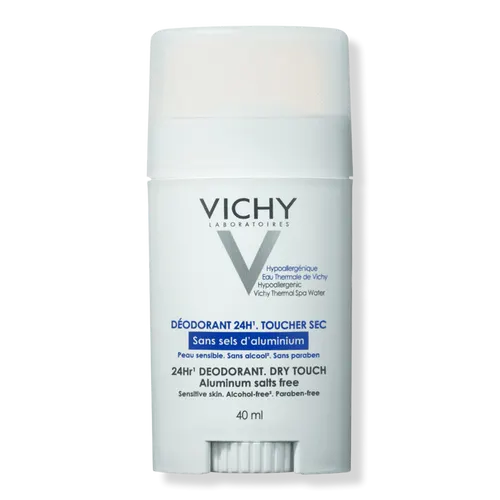
Vichy Aluminum Free 24 Hour Dry Touch Deodorant
Deodorantbody care
Safety score
Pregnancy-focused assessment
No Known Risks99/100
Higher concernLower concern
No higher-risk ingredients were identified in MamaSkin's current assessment. Check the latest package before deciding.
Formula and assessment check
Ingredient safety review updated 23 March 2026. Product formulas can change, so compare the ingredients shown here with the packaging you have.
Report a formula mismatchIngredient breakdown
See how the listed formula falls across MamaSkin's pregnancy-focused risk bands.
15
No known risks
0
Low risk
0
Medium risk
0
High risk
Ingredients
Ingredients with a higher risk flag appear first, followed by the rest of the formula.
Propylene Glycol
No Known RisksPropylene glycol is a common solvent and humectant with a long history of use; it is not considered a pregnancy or breastfeeding concern in topical cosmetics, though some individuals may experience irritation in leave-on products.
Sources: CIR; EU/UK Cosmetics Regulation
Glycerin
No Known RisksGlycerin is a widely used humectant that supports hydration and the skin barrier, with a long safety record and no known pregnancy or breastfeeding concerns in topical cosmetic use.
Sources: CIR; EU/UK Cosmetics Regulation
Show all (15)
Aqua / Water
No Known RisksSodium Stearate
No Known RisksA fatty acid or fatty-acid salt used as an emollient, cleanser, emulsifier or texture agent. Cosmetic safety reviewers concluded that the assessed fatty acids and salts are safe in current practices when formulated to be non-irritating and non-sensitising. No pregnancy-specific concern was identified for normal topical exposure.
Sources: CIR: Safety Assessment of Fatty Acids and Fatty Acid Salts as Used in Cosmetics https://cir-safety.org/supplementaldoc/safety-assessment-fatty-acids-fatty-acid-salts-used-cosmetics
Steareth-100
No Known Riskssteareth-100 is a cosmetic formulation, mineral, sugar-derived or organic-acid ingredient. Available identity, use and related safety evidence did not identify a pregnancy-specific concern for normal topical cosmetic exposure. Cosmetic-grade purity and ordinary irritation precautions remain applicable.
Sources: CIR ingredient and related-family safety assessments; CIR Quick Reference Table https://www.cir-safety.org/supplementaldoc/quick-reference-table-december-2025; European Commission CosIng
Perlite
No Known RisksAn insoluble mineral or elemental particle used for optical effects, absorbency or cosmetic texture. Meaningful systemic exposure through intact skin is expected to be low. No pregnancy- or reproductive-toxicity signal was identified for normal topical cosmetic use. Particle size, source purity, metal impurities and inhalation of airborne powder remain formulation-specific considerations, and local contact allergy is possible with gold.
Sources: European Commission CosIng ingredient inventory; SCCS guidance on the safety assessment of nanomaterials in cosmetics https://health.ec.europa.eu/scientific-committees/scientific-committee-consumer-safety-sccs_en; published cosmetic and dermatology literature for gold, diamond powder and perlite.
Behenic Acid
No Known RisksA fatty acid or fatty-acid salt used as an emollient, cleanser, emulsifier or texture agent. Cosmetic safety reviewers concluded that the assessed fatty acids and salts are safe in current practices when formulated to be non-irritating and non-sensitising. No pregnancy-specific concern was identified for normal topical exposure.
Sources: CIR: Safety Assessment of Fatty Acids and Fatty Acid Salts as Used in Cosmetics https://cir-safety.org/supplementaldoc/safety-assessment-fatty-acids-fatty-acid-salts-used-cosmetics
Edta
No Known RisksChelating agent (often listed as EDTA); minimal dermal absorption and no known pregnancy or breastfeeding risks at typical cosmetic concentrations.
Sources: CIR; EU/UK Cosmetics Regulation
Zinc Gluconate
No Known RisksA mineral salt of gluconic acid used for skin conditioning or formula support. Cosmetic safety reviewers concluded that the assessed gluconate salts are safe in current practices when formulated to be non-irritating.
Sources: CIR: Zinc Gluconate final assessment, March 2018; Copper Gluconate final assessment, March 2025; December 2025 Quick Reference Table https://cir-safety.org/sites/default/files/QRT-Update-Dec2025.pdf
Sodium Hydroxide
No Known RiskspH adjuster used in very small quantities to balance formulations. Not associated with pregnancy-specific concerns.
Sources: Scientific Committee on Consumer Safety (EU); European cosmetics regulatory framework
Sodium Styrene/Acrylates Copolymer
No Known RisksSodium Lauryl Sulfate
No Known RisksAn anionic cleansing surfactant that can irritate skin and eyes, especially at higher concentrations or with prolonged contact. Cosmetic safety review supports use when formulated to minimise irritation; no pregnancy-specific systemic concern was identified for normal topical or rinse-off exposure.
Sources: Cosmetic Ingredient Review: safety assessments of Sodium Lauryl Sulfate and related alkyl sulfates; European Commission CosIng ingredient inventory.
Sodium Palmitoyl Proline
No Known Riskssodium palmitoyl proline is a cosmetic emollient, ester, fatty alcohol or lipid-derived formulation aid. Relevant CIR family evidence supports normal cosmetic use with purity and irritation qualifications retained. No pregnancy-specific concern was identified for ordinary topical exposure.
Sources: CIR Safety Assessment of Alkyl Esters as Used in Cosmetics https://www.cir-safety.org/supplementaldoc/safety-assessment-alkyl-esters-used-cosmetics; European Commission CosIng ingredient inventory.
Nymphaea Alba Extract / Nymphaea Alba Flower Extract.
No Known RisksFormulations can change without notice. For the most accurate result, compare this list with your packaging and scan the exact ingredient label in MamaSkin when you repurchase.
How to use this assessment
The risk band is the primary conclusion. The score adds detail within that band and should not be used to compare products as if a one-point difference were clinically meaningful.
MamaSkin provides pregnancy-focused information, not medical advice. Your midwife, GP, pharmacist or dermatologist should take priority when your circumstances differ from typical cosmetic use.