Kérastase
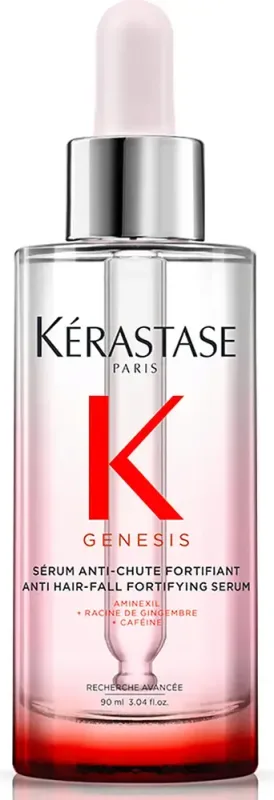
Kérastase Genesis Anti Hair-Fall Fortifying Serum
Medium risk57/100
Shampoos
This formula needs extra consideration during pregnancy. Review the flagged ingredients with your healthcare professional.
27 of 27 ingredients rated
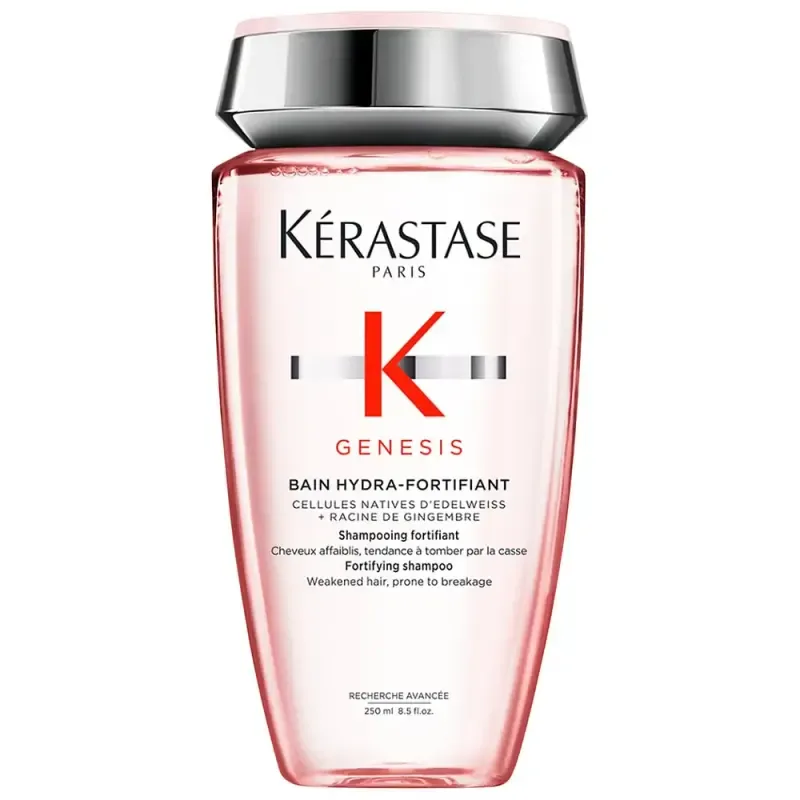
MamaSkin rates the recorded formula for Kérastase Genesis Bain Hydra-Fortifiant Shampoo as Medium risk (58/100). Discuss the flagged ingredients with a qualified healthcare professional before using this formula during pregnancy.
The recorded formula includes 4 ingredient entries with risk flags: Benzyl Salicylate (Medium risk), Sodium Laureth Sulfate (Low risk), Salicylic Acid (Low risk), plus others listed in the breakdown. These are ingredient-level flags; they do not replace the stored product assessment or account for every formulation detail.
27 of 27 ingredient entries on this page have a recorded score, evidence summary and source text. That describes documentation coverage, not proof that the finished formula has been clinically tested during pregnancy.
How we assess productsThe recorded formula, with evidence behind each rating. Unmatched ingredients are marked Not assessed in grey.
Benzyl salicylate is a fragrance ingredient that is also evaluated for potential endocrine activity and sensitisation. SCCS notes some indications for endocrine mode of action, and fragrance allergens are relevant for contact allergy risk; pregnancy-specific human outcome data for topical exposure are limited. The medium-risk signal is endocrine-related uncertainty and sensitisation potential rather than a defined pregnancy-specific toxicity dataset.
Sources: SCCS/1656/23: Benzyl salicylate https://health.ec.europa.eu/publications/benzyl-salicylate-cas-no-118-58-1-ec-no-204-262-9_en
Sodium laureth sulfate (SLES) is a cleansing surfactant used mainly in rinse-off products. CIR concluded sodium and ammonium laureth sulfate safe in current cosmetics when formulations are non-irritating; skin and eye irritation is the main identified concern. The review does not identify a pregnancy-specific restriction for normal cosmetic use. MamaSkin retains Low Risk, with extra care for sensitive or damaged skin.
Sources: CIR: Final report on sodium and ammonium laureth sulfate https://pubmed.ncbi.nlm.nih.gov/20634505/
Umbrella term for an undisclosed fragrance blend. It’s not usually a pregnancy-specific concern at normal cosmetic use levels, but the exact components and concentrations aren’t fully disclosed on the label, so we score it more conservatively. If you prefer maximum transparency (or you’re sensitive to fragrance compounds), choose fragrance-free/unscented products.
Sources: SCCS: Fragrance allergens in cosmetic products https://health.ec.europa.eu/latest-updates/sccs-new-opinion-fragrance-allergens-cosmetic-products-2012-07-31_en
Salicylic acid is a beta-hydroxy acid (BHA) used for acne, exfoliation and preservation. Common over-the-counter acne strengths are 0.5-2%, including 0.5%, 1% and 2%; the FDA lists this acne-treatment range. Pregnancy guidance distinguishes these topical products from oral salicylates and strong peels. MotherToBaby reports that ACOG allows over-the-counter topical salicylic acid during pregnancy when needed. Only a small amount of topical acne treatment usually reaches the bloodstream through intact skin; exposure can increase with damaged skin, frequent use or treatment of large areas. Direct salicylic-acid-specific pregnancy data remain limited. MamaSkin's Low Risk rating is a dose-and-use precaution, not evidence that ordinary low-strength skincare causes fetal harm or a recommendation to avoid every BHA product. Use as directed on limited areas of intact skin. Discuss strengths above 2%, chemical peels, wart/corn removers, large-area treatment or use under occlusion with your clinician before use during pregnancy. The American Academy of Dermatology specifically advises discussing and limiting higher-strength salicylic acid above 2%. Percentage alone does not establish safety: formulation, area, frequency and skin condition also matter. General cosmetic-use limits are not pregnancy-specific safety thresholds.
Sources: https://mothertobaby.org/fact-sheets/topical-acne-treatments-pregnancy/; https://www.aad.org/public/everyday-care/skin-care-secrets/routine/pregnancy-skin-care; https://www.accessdata.fda.gov/drugsatfda_docs/omuf/monographs/OTC%20Monograph_M006-Topical%20Acne%20drug%20products%20for%20OTC%20Human%20Use%2011.23.2021.pdf; https://health.ec.europa.eu/publications/salicylic-acid-cas-no-69-72-7-ec-no-200-712-3_en; https://www.ncbi.nlm.nih.gov/books/NBK500675/
Water (Aqua) is the standard purified water used as a cosmetic solvent. It has no pregnancy-specific risk in normal topical use.
Sources: https://pubchem.ncbi.nlm.nih.gov/compound/Water, https://single-market-economy.ec.europa.eu/sectors/cosmetics/cosmetic-ingredient-database/cosing-glossary-ingredients_en
pH adjuster used in small amounts to maintain product stability. Not associated with pregnancy-specific concerns.
Sources: Scientific Committee on Consumer Safety (EU); European cosmetics regulatory framework
Mild amphoteric surfactant used in cleansers and shampoos to boost foam and reduce harshness. Reviewed cosmetic safety sources support present cosmetic use, with no pregnancy- or breastfeeding-specific topical signal identified; the main practical caveat is irritation or allergy in some users, sometimes linked to sensitising impurities.
Sources: CIR: Safety Assessment of Cocamidopropyl Betaine and Related Amidopropyl Betaines as Used in Cosmetics; EU CosIng / cosmetics regulatory inventory
pH adjuster used in very small quantities to balance formulations. Not associated with pregnancy-specific concerns.
Sources: Scientific Committee on Consumer Safety (EU); European cosmetics regulatory framework
Propylene glycol is a common solvent and humectant with a long history of use; it is not considered a pregnancy or breastfeeding concern in topical cosmetics, though some individuals may experience irritation in leave-on products.
Sources: CIR; EU/UK Cosmetics Regulation
Sodium chloride is used to adjust viscosity and texture in formulations; topical cosmetic use is considered low concern with no known pregnancy or breastfeeding risks.
Sources: CIR; EU/UK Cosmetics Regulation
Preservative widely used in foods and cosmetics. Considered safe at regulated concentrations with low systemic exposure from topical use.
Sources: Scientific Committee on Consumer Safety (EU); European cosmetics regulatory framework
Solvent and humectant used to improve texture and ingredient solubility in topical cosmetics. Reviewed cosmetic ingredient references do not identify a pregnancy- or breastfeeding-specific concern for normal topical use.
Sources: CIR cosmetic ingredient safety references for alkane diols/glycols; EU CosIng / cosmetics regulatory inventory
A large cationic cellulose polymer used to condition hair and improve product texture. Cosmetic safety reviewers concluded that Polyquaternium-10 is safe in current cosmetic use; human testing did not indicate irritation or sensitization at reviewed concentrations. No pregnancy-specific concern is identified for normal topical exposure.
Sources: CIR: Safety Assessment of Polyquaternium-10, cited in the CIR Quick Reference Table https://www.cir-safety.org/sites/default/files/safe-092017posted122017.pdf
Limonene is a common fragrance component used at low levels in cosmetics; it is not a pregnancy-specific concern in topical use, but it is a recognised fragrance allergen and may trigger irritation or sensitisation in some people, especially if the product oxidises over time.
Sources: EU/UK cosmetics (fragrance allergen labelling); IFRA; toxicology reviews
Linalool is a common fragrance component used at low levels in cosmetics; it is not a pregnancy-specific concern in topical use, but it is a recognised fragrance allergen and may trigger irritation or sensitisation in some people, especially if the product oxidises over time.
Sources: EU/UK cosmetics (fragrance allergen labelling); IFRA; toxicology reviews
Glycerin is a widely used humectant that supports hydration and the skin barrier, with a long safety record and no known pregnancy or breastfeeding concerns in topical cosmetic use.
Sources: CIR; EU/UK Cosmetics Regulation
An aromatic fragrance ingredient found naturally in some plants and also manufactured. It is subject to fragrance-allergen labelling because it can sensitise susceptible users; no pregnancy-specific concern is identified for normal topical cosmetic use.
Sources: European Commission: Fragrance allergens labelling https://single-market-economy.ec.europa.eu/sectors/cosmetics/cosmetic-products-specific-topics/fragrance-allergens-labelling_en; SCCS fragrance-allergen opinions
A ginger root extract used mainly for skin conditioning and fragrance support. Cosmetic safety reviewers concluded that the assessed Zingiber officinale root-derived ingredients are safe in current practices when formulated to be non-sensitising. This topical cosmetic conclusion should not be read as advice about ingesting concentrated ginger supplements.
Sources: CIR: Safety Assessment of Zingiber officinale (Ginger)-Derived Ingredients as Used in Cosmetics https://www.cir-safety.org/supplementaldoc/safety-assessment-zingiber-officinale-ginger-%E2%80%93-derived-ingredients-used-cosmetics-0
A lemon-scented mixture of the aldehydes geranial and neral used in fragrance. Citral is a recognised skin sensitiser, but current cosmetic concerns relate to allergy and concentration rather than a pregnancy-specific hazard from normal topical use.
Sources: European Commission: Fragrance allergens labelling https://single-market-economy.ec.europa.eu/sectors/cosmetics/cosmetic-products-specific-topics/fragrance-allergens-labelling_en; SCCS fragrance-allergen opinions
Benzyl alcohol is used as a preservative and fragrance component in cosmetics; it is not a pregnancy-specific concern at typical topical exposure, but it can be irritating or sensitising for some individuals, particularly in leave-on products.
Sources: CIR; EU/UK Cosmetics Regulation; toxicology reviews
A rose-like fragrance ingredient that occurs naturally in many essential oils and may also be manufactured. Its main cosmetic concern is contact allergy in susceptible users; no pregnancy-specific hazard is identified for normal topical cosmetic exposure.
Sources: European Commission: Fragrance allergens labelling https://single-market-economy.ec.europa.eu/sectors/cosmetics/cosmetic-products-specific-topics/fragrance-allergens-labelling_en; SCCS fragrance-allergen opinions
A sugar-derived humectant commonly used with xylitol and anhydroxylitol to support skin hydration. Exact pregnancy-specific topical data are limited. Cosmetic safety assessments of the related saccharide mixture and xylitol did not identify a reproductive or pregnancy-specific concern at cosmetic exposure; available data primarily support local tolerance rather than proving pregnancy safety. No topical contraindication was identified in the reviewed material.
Sources: CIR: Safety Assessment of Saccharide Isomerate and Related Saccharides https://cir-safety.org/supplementaldoc/safety-assessment-anhydrogalactose-anhydroglucitol-anhydroxylitol-arabinose-psicose-; CIR: Safety Assessment of Mannitol, Sorbitol, and Xylitol https://www.cir-safety.org/sites/default/files/xylito122019FR.pdf
Sugar-derived humectant used to support hydration, often as part of saccharide blends. Reviewed cosmetic safety sources support normal topical use, with no pregnancy- or breastfeeding-specific topical signal identified in the material reviewed.
Sources: CIR: Safety Assessment of Saccharide Humectants / Saccharide Isomerate, etc.; EU CosIng / cosmetics regulatory inventory
A botanical extract, plant water or plant juice used for conditioning, soothing or antioxidant support. Direct pregnancy studies of this exact cosmetic material were not identified, but no reproductive or developmental hazard was identified for normal topical exposure. Oral herbal or medicinal use is outside this classification.
Sources: European Commission CosIng ingredient inventory; CIR botanical safety framework and relevant plant-derived ingredient assessments; no ingredient-specific human pregnancy study of normal topical cosmetic use was identified.
Sugar alcohol humectant used to help maintain hydration and improve skin feel. Reviewed cosmetic safety sources support normal topical use, with no pregnancy- or breastfeeding-specific topical signal identified in the material reviewed.
Sources: CIR: Safety Assessment of Mannitol, Sorbitol, and Xylitol as Used in Cosmetics; EU CosIng / cosmetics regulatory inventory
Natural polysaccharide thickener used for stability and texture. Not associated with pregnancy-specific concerns.
Sources: European cosmetics regulatory framework
Synthetic peptide mimetic used in topical cosmetic anti-aging formulas, often described as a neurotransmitter-inhibiting or expression-line peptide. Available cosmetic ingredient references do not identify a pregnancy- or breastfeeding-specific concern for normal topical cosmetic use.
Sources: Schagen SK. Topical Peptide Treatments with Effective Anti-Aging Results. Cosmetics. 2017;4(2):16. doi:10.3390/cosmetics4020016; EU CosIng / INCI cosmetic ingredient references.
Water, Sodium Laureth Sulfate, Citric Acid, Cocamidopropyl Betaine, Sodium Hydroxide, Propylene Glycol, Sodium Chloride, Sodium Benzoate, Hexylene Glycol, Polyquaternium-10, Salicylic Acid, Limonene, Linalool, Glycerin, Benzyl Salicylate, Coumarin, Zingiber Officinale Root Extract, Citral, Benzyl Alcohol, Citronellol, Xylitylglucoside, Anhydroxylitol, Leontopodium Alpinum Callus Culture Extract, Xylitol, Xanthan Gum, Dipeptide Diaminobutyroyl Benzylamide Diacetate, Parfum
Ingredient ratings refreshed 1 October 2026. Formulas vary by market and can change. Always compare with your packaging.
The recorded formula includes 4 ingredient entries with risk flags: Benzyl Salicylate (Medium risk), Sodium Laureth Sulfate (Low risk), Salicylic Acid (Low risk), plus others listed in the breakdown. These are ingredient-level flags; they do not replace the stored product assessment or account for every formulation detail. The product score is a stored assessment, not a clinical safety guarantee.
27 of 27 ingredient entries on this page have a recorded score, evidence summary and source text. That describes documentation coverage, not proof that the finished formula has been clinically tested during pregnancy.
Only if the ingredient list on your packaging matches the recorded formula shown here. Formulas can differ by market and change over time. Compare the full list, not just the product name; report a mismatch if it differs.
No. This page presents a pregnancy-focused product assessment. Do not infer a breastfeeding conclusion from its score or label; breastfeeding requires a separate assessment of the formula and how it is used.