Kérastase
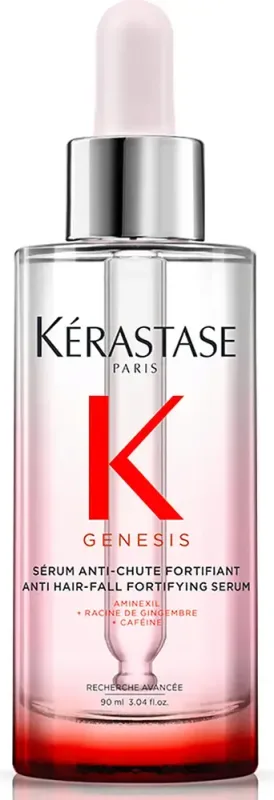
Kérastase Genesis Anti Hair-Fall Fortifying Serum
Medium risk57/100
Hair Serums
This formula needs extra consideration during pregnancy. Review the flagged ingredients with your healthcare professional.
29 of 29 ingredients rated
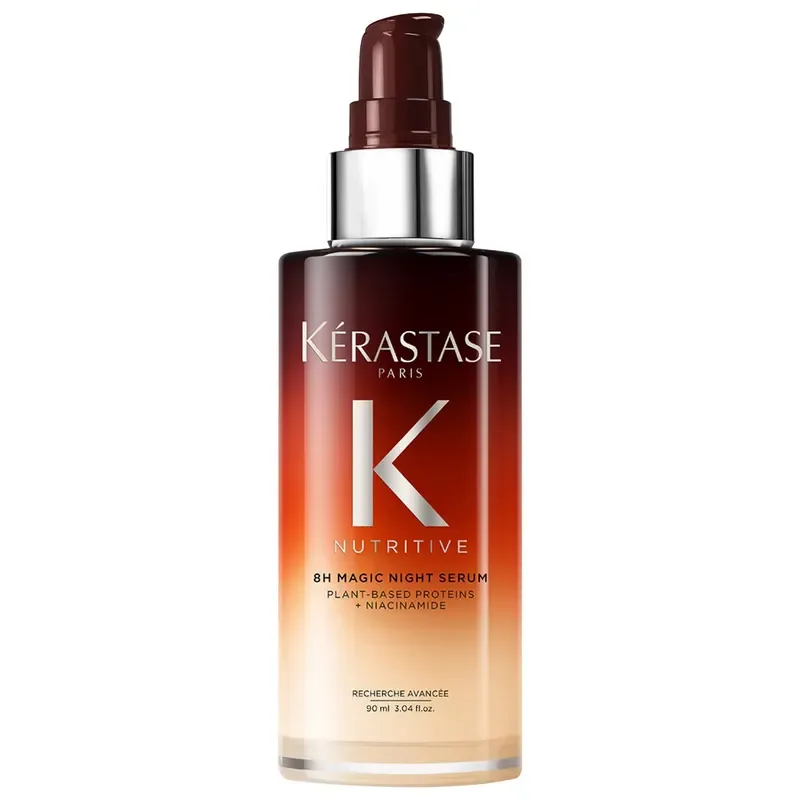
MamaSkin rates the recorded formula for Kérastase Nutritive 8H Magic Night Hair Serum for Dry Hair as Medium risk (58/100). Discuss the flagged ingredients with a qualified healthcare professional before using this formula during pregnancy.
The recorded formula includes 5 ingredient entries with risk flags: Benzyl Salicylate (Medium risk), Dimethicone (Low risk), Polyacrylamide (Low risk), plus others listed in the breakdown. These are ingredient-level flags; they do not replace the stored product assessment or account for every formulation detail.
29 of 29 ingredient entries on this page have a recorded score, evidence summary and source text. That describes documentation coverage, not proof that the finished formula has been clinically tested during pregnancy.
How we assess productsThe recorded formula, with evidence behind each rating. Unmatched ingredients are marked Not assessed in grey.
Benzyl salicylate is a fragrance ingredient that is also evaluated for potential endocrine activity and sensitisation. SCCS notes some indications for endocrine mode of action, and fragrance allergens are relevant for contact allergy risk; pregnancy-specific human outcome data for topical exposure are limited. The medium-risk signal is endocrine-related uncertainty and sensitisation potential rather than a defined pregnancy-specific toxicity dataset.
Sources: SCCS/1656/23: Benzyl salicylate https://health.ec.europa.eu/publications/benzyl-salicylate-cas-no-118-58-1-ec-no-204-262-9_en
Phenoxyethanol is a preservative permitted in EU cosmetics up to 1.0%. The SCCS concluded it is safe for cosmetic use at that level, including when considering higher cosmetic exposure scenarios in infants and young children. Main practical concern is irritation/stinging on very sensitive or compromised skin rather than a pregnancy- or breastfeeding-specific risk.
Sources: SCCS/1575/16: Phenoxyethanol opinion https://health.ec.europa.eu/publications/phenoxyethanol_en
An exact label variant for an undisclosed fragrance blend. Fragrance is not usually a pregnancy-specific concern at normal cosmetic levels, but the precise components and concentrations are not fully disclosed, so MamaSkin scores the umbrella term conservatively. People sensitive to fragrance may prefer fragrance-free products.
Sources: European Commission: Fragrance allergens labelling https://single-market-economy.ec.europa.eu/sectors/cosmetics/cosmetic-products-specific-topics/fragrance-allergens-labelling_en; IFRA Standards
Dimethicone is a silicone polymer used as a skin protectant and slip/conditioning agent. It is considered inert with minimal dermal absorption; the main practical issues are cosmetic (feel) and occasional irritation in very sensitive users. It is not a pregnancy-specific concern in topical cosmetic use.
Sources: CIR: Amended Safety Assessment of Dimethicone, Methicone, and Substituted-Methicone Polymers as Used in Cosmetics https://cir-safety.org/supplementaldoc/amended-safety-assessment-dimethicone-methicone-and-substituted-methicone-polymers-2
A high-molecular-weight polymer used as a film former, binder and texture ingredient. Cosmetic-grade polyacrylamide is considered safe when residual acrylamide monomer is tightly controlled. MamaSkin classifies it as low risk because safety depends on manufacturing controls for the hazardous residual monomer, rather than because the finished polymer is a known pregnancy-specific hazard.
Sources: CIR: Safety Assessment and Re-Review of Polyacrylamide https://www.cir-safety.org/sites/default/files/RR_Polyacrylamide.pdf; EU Cosmetics Regulation 1223/2009, Annex III residual acrylamide limits https://eur-lex.europa.eu/legal-content/EN/TXT/?uri=CELEX%3A32009R1223
Water (Aqua) is the standard purified water used as a cosmetic solvent. It has no pregnancy-specific risk in normal topical use.
Sources: https://pubchem.ncbi.nlm.nih.gov/compound/Water, https://single-market-economy.ec.europa.eu/sectors/cosmetics/cosmetic-ingredient-database/cosing-glossary-ingredients_en
c13-16 isoalkane is an emollient lipid, ester, fatty-acid derivative, butter or hydrocarbon texture ingredient. Relevant cosmetic-family evidence supports use with normal purity and formulation controls. No pregnancy-specific concern was identified for ordinary topical exposure; source allergy or irritation can still occur where applicable.
Sources: CIR Safety Assessment of Alkyl Esters as Used in Cosmetics https://www.cir-safety.org/supplementaldoc/safety-assessment-alkyl-esters-used-cosmetics; CIR plant-oil and fatty-acid derivative assessments.
Niacinamide (vitamin B3) is widely used for barrier support and tone/texture benefits, and is generally considered safe in pregnancy and breastfeeding when used topically at cosmetic concentrations.
Sources: CIR; EU/UK Cosmetics Regulation
Glycerin is a widely used humectant that supports hydration and the skin barrier, with a long safety record and no known pregnancy or breastfeeding concerns in topical cosmetic use.
Sources: CIR; EU/UK Cosmetics Regulation
A branched hydrocarbon emollient corresponding to the C13/C14 isoparaffin composition assessed by CIR. Ordinary topical use has low expected systemic exposure and no identified pregnancy-specific concern. Avoid ingestion or deliberate inhalation; concentrated solvents may irritate skin.
Sources: https://journals.sagepub.com/doi/pdf/10.1177/1091581812463087
An ethoxylated fatty alcohol used mainly as an emulsifier, surfactant or solubiliser. Cosmetic safety reviewers concluded that alkyl PEG/PPG ethers are safe in current practices when formulated to be non-irritating. Manufacturing controls should limit residual ethylene oxide and 1,4-dioxane.
Sources: CIR: Safety Assessment of Alkyl PEG/PPG Ethers as Used in Cosmetics https://cir-safety.org/supplementaldoc/safety-assessment-alkyl-peg/ppg-ethers-used-cosmetics
Panthenol (pro-vitamin B5) is used for soothing and barrier support and is generally well tolerated, with no known pregnancy or breastfeeding concerns in topical cosmetic use.
Sources: CIR; EU/UK Cosmetics Regulation
A stable vitamin C derivative used as an antioxidant and skin-conditioning ingredient. The Cosmetic Ingredient Review concluded that ascorbyl glucoside is safe in current cosmetic use; normal topical exposure does not identify a pregnancy- or breastfeeding-specific concern.
Sources: CIR: Safety Assessment of Ascorbyl Glucoside and Sodium Ascorbyl Glucoside https://www.cir-safety.org/supplementaldoc/safety-assessment-ascorbyl-glucoside-and-sodium-ascorbyl-glucoside-used-cosmetics
Solvent and humectant commonly used in leave-on products. Not associated with pregnancy-specific concerns at cosmetic exposure levels.
Sources: Cosmetic Ingredient Review (US); Scientific Committee on Consumer Safety (EU)
Linalool is a common fragrance component used at low levels in cosmetics; it is not a pregnancy-specific concern in topical use, but it is a recognised fragrance allergen and may trigger irritation or sensitisation in some people, especially if the product oxidises over time.
Sources: EU/UK cosmetics (fragrance allergen labelling); IFRA; toxicology reviews
A floral fragrance ingredient and recognised contact allergen. Current safety concerns focus on skin sensitisation and controlled cosmetic concentrations; no pregnancy-specific hazard is identified for normal topical cosmetic exposure.
Sources: European Commission: Fragrance allergens labelling https://single-market-economy.ec.europa.eu/sectors/cosmetics/cosmetic-products-specific-topics/fragrance-allergens-labelling_en; SCCS fragrance-allergen opinions
Benzyl alcohol is used as a preservative and fragrance component in cosmetics; it is not a pregnancy-specific concern at typical topical exposure, but it can be irritating or sensitising for some individuals, particularly in leave-on products.
Sources: CIR; EU/UK Cosmetics Regulation; toxicology reviews
A synthetic floral fragrance ingredient. Its main consumer-relevant concern is skin sensitisation in susceptible users; no pregnancy-specific hazard is identified for normal topical cosmetic exposure.
Sources: European Commission: Fragrance allergens labelling https://single-market-economy.ec.europa.eu/sectors/cosmetics/cosmetic-products-specific-topics/fragrance-allergens-labelling_en; SCCS fragrance-allergen opinions
A rose-like fragrance ingredient that occurs naturally in many essential oils and may also be manufactured. Its main cosmetic concern is contact allergy in susceptible users; no pregnancy-specific hazard is identified for normal topical cosmetic exposure.
Sources: European Commission: Fragrance allergens labelling https://single-market-economy.ec.europa.eu/sectors/cosmetics/cosmetic-products-specific-topics/fragrance-allergens-labelling_en; SCCS fragrance-allergen opinions
A mixture of smaller wheat-protein peptides used for hair and skin conditioning. Cosmetic safety reviewers concluded that hydrolyzed wheat protein is safe when the weight-average peptide molecular weight is 3,500 Da or less, a limit intended to reduce sensitisation risk. This does not imply that a person with a wheat-protein allergy cannot react.
Sources: CIR: Safety Assessment of Hydrolyzed Wheat Protein and Hydrolyzed Wheat Gluten as Used in Cosmetics https://www.cir-safety.org/sites/default/files/plant-derived_proteins.pdf
A violet-like fragrance ingredient used in perfumes and fragranced cosmetics. Its principal consumer concern is contact allergy in susceptible users; no pregnancy-specific hazard is identified for normal topical cosmetic exposure.
Sources: European Commission: Fragrance allergens labelling https://single-market-economy.ec.europa.eu/sectors/cosmetics/cosmetic-products-specific-topics/fragrance-allergens-labelling_en; SCCS fragrance-allergen opinions
An aromatic fragrance ingredient found naturally in some plants and also manufactured. It is subject to fragrance-allergen labelling because it can sensitise susceptible users; no pregnancy-specific concern is identified for normal topical cosmetic use.
Sources: European Commission: Fragrance allergens labelling https://single-market-economy.ec.europa.eu/sectors/cosmetics/cosmetic-products-specific-topics/fragrance-allergens-labelling_en; SCCS fragrance-allergen opinions
A plant-derived protein or peptide mixture used mainly for hair and skin conditioning. Cosmetic safety reviewers concluded that the assessed plant-derived proteins and peptides are safe in current practices. Protein allergy remains possible in susceptible people.
Sources: CIR: Safety Assessment of Plant-Derived Proteins and Peptides as Used in Cosmetics https://www.cir-safety.org/supplementaldoc/safety-assessment-plant-derived-proteins-and-peptides-used-cosmetics-0
A mixture of smaller soy-protein peptides used for hair and skin conditioning. Cosmetic safety reviewers concluded that hydrolyzed soy protein is safe in current cosmetic practices. A person with sensitivity to residual soy proteins may still react, but no pregnancy-specific concern was identified for normal topical exposure.
Sources: CIR: Safety Assessment of Plant-Derived Proteins and Peptides as Used in Cosmetics https://www.cir-safety.org/sites/default/files/plant-derived_proteins.pdf
Limonene is a common fragrance component used at low levels in cosmetics; it is not a pregnancy-specific concern in topical use, but it is a recognised fragrance allergen and may trigger irritation or sensitisation in some people, especially if the product oxidises over time.
Sources: EU/UK cosmetics (fragrance allergen labelling); IFRA; toxicology reviews
A botanical extract, juice or water used primarily for skin conditioning, moisturising, soothing or antioxidant support. Direct pregnancy studies of the named cosmetic material were not identified. No reproductive or developmental hazard was identified for normal topical exposure to a compliant finished cosmetic; oral herbal or medicinal use is outside this classification.
Sources: European Commission CosIng ingredient inventory; Cosmetic Ingredient Review botanical safety-assessment framework and relevant plant-family assessments. No ingredient-specific human pregnancy study of normal topical cosmetic use was identified.
pH adjuster used in small amounts to maintain product stability. Not associated with pregnancy-specific concerns.
Sources: Scientific Committee on Consumer Safety (EU); European cosmetics regulatory framework
ci 19140 yellow 5 is an exact catalogue synonym or label form of a regulated certified yellow colour already assessed by MamaSkin as No Known Risks. Normal cosmetic use requires the correct colour identity, purity, certification and route-specific regulatory compliance. Rare sensitivity can occur, but no pregnancy-specific concern was identified for a compliant finished cosmetic.
Sources: FDA Color Additives and Cosmetics Fact Sheet https://www.fda.gov/industry/color-additives/color-additives-and-cosmetics-fact-sheet; FDA Color Additives Permitted for Use in Cosmetics https://www.fda.gov/cosmetics/cosmetic-ingredient-names/color-additives-permitted-use-cosmetics
Exact formatting/common-name variant of ci 14700; it inherits the canonical scientific assessment. A Colour Index or lake name for a regulated cosmetic colour additive. Permitted product areas differ by colour, and certified colours must meet applicable identity and purity specifications. No pregnancy-specific concern was identified for compliant topical cosmetic use.
Sources: FDA: Regulatory Status of Color Additives https://hfpappexternal.fda.gov/scripts/fdcc/index.cfm?set=ColorAdditives; FDA: Color Additives Permitted for Use in Cosmetics https://www.fda.gov/cosmetics/cosmetic-ingredient-names/color-additives-permitted-use-cosmetics; 21 CFR Parts 73, 74 and 82.
Aqua / Water, Dimethicone, C13-16 Isoalkane, Niacinamide, Glycerin, Polyacrylamide, Phenoxyethanol, C13-14 Isoalkane, Laureth-7, Panthenol, Ascorbyl Glucoside, Butylene Glycol, Linalool, Hydroxycitronellal, Benzyl Salicylate, Benzyl Alcohol, Hexyl Cinnamal, Citronellol, Hydrolyzed Wheat Protein, Alpha-Isomethyl Ionone, Coumarin, Hydrolyzed Corn Protein, Hydrolyzed Soy Protein, Limonene, Iris Florentina Root Extract, Citric Acid, Ci 19140 / Yellow 5, Ci 14700 / Red 4, Parfum / Fragrance.
Ingredient ratings refreshed 15 October 2026. Formulas vary by market and can change. Always compare with your packaging.
The recorded formula includes 5 ingredient entries with risk flags: Benzyl Salicylate (Medium risk), Dimethicone (Low risk), Polyacrylamide (Low risk), plus others listed in the breakdown. These are ingredient-level flags; they do not replace the stored product assessment or account for every formulation detail. The product score is a stored assessment, not a clinical safety guarantee.
No. Niacinamide appears in the recorded formula, but its individual rating applies to that ingredient, not automatically to the whole product. Check the other ingredient ratings, any grey Not assessed entries and the stored product assessment. A niacinamide percentage or a product name is not a substitute for checking the full list.
29 of 29 ingredient entries on this page have a recorded score, evidence summary and source text. That describes documentation coverage, not proof that the finished formula has been clinically tested during pregnancy.
Only if the ingredient list on your packaging matches the recorded formula shown here. Formulas can differ by market and change over time. Compare the full list, not just the product name; report a mismatch if it differs.
No. This page presents a pregnancy-focused product assessment. Do not infer a breastfeeding conclusion from its score or label; breastfeeding requires a separate assessment of the formula and how it is used.