Summer Fridays
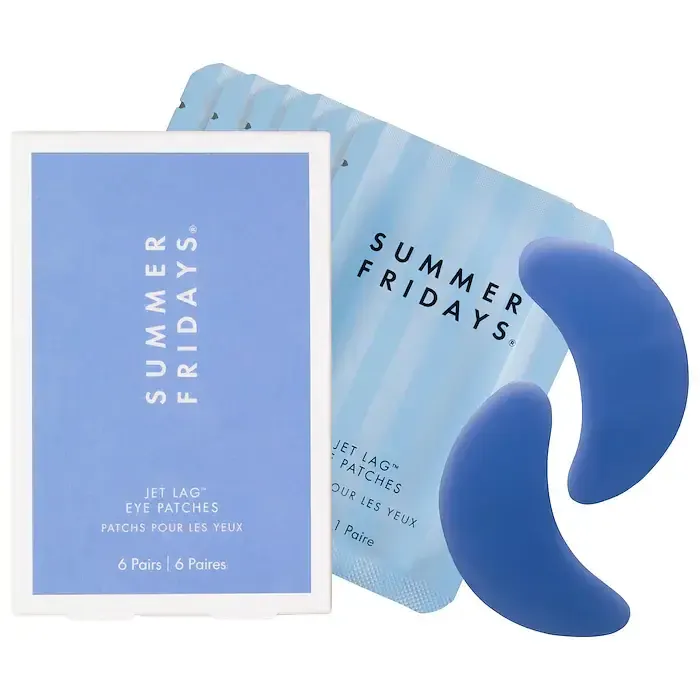
Summer Fridays Jet Lag Eye Patches
Eye Masksmasks
Safety score
Pregnancy-focused assessment
No Known Risks99/100
Higher concernLower concern
No higher-risk ingredients were identified in MamaSkin's current assessment. Check the latest package before deciding.
Formula and assessment check
Ingredient safety review updated 24 November 2025. Product formulas can change, so compare the ingredients shown here with the packaging you have.
Report a formula mismatchIngredient breakdown
See how the listed formula falls across MamaSkin's pregnancy-focused risk bands.
44
No known risks
0
Low risk
0
Medium risk
0
High risk
Ingredients
Ingredients with a higher risk flag appear first, followed by the rest of the formula.
Glycerin
No Known RisksGlycerin is a widely used humectant that supports hydration and the skin barrier, with a long safety record and no known pregnancy or breastfeeding concerns in topical cosmetic use.
Sources: CIR; EU/UK Cosmetics Regulation
Butylene Glycol
No Known RisksSolvent and humectant commonly used in leave-on products. Not associated with pregnancy-specific concerns at cosmetic exposure levels.
Sources: Cosmetic Ingredient Review (US); Scientific Committee on Consumer Safety (EU)
Show all (44)
Niacinamide
No Known RisksNiacinamide (vitamin B3) is widely used for barrier support and tone/texture benefits, and is generally considered safe in pregnancy and breastfeeding when used topically at cosmetic concentrations.
Sources: CIR; EU/UK Cosmetics Regulation
Caffeine
No Known RisksMethylxanthine used in cosmetics (e.g., de-puffing/firming and antioxidant support). No pregnancy-specific contraindications are identified for topical cosmetic use.
Sources: CIR (Methylxanthines); PubMed (NLM)
Cucumis Sativus Fruit Extract
No Known RisksA cucumber fruit extract used for skin conditioning. Cosmetic safety reviewers concluded that Cucumis sativus-derived ingredients are safe in current cosmetic practices of use and concentration when formulated to avoid sensitisation. No pregnancy-specific concern was identified for normal topical cosmetic exposure, although irritation or allergy to a botanical-containing formula remains possible.
Sources: CIR: Final Safety Assessment of Cucumis sativus (Cucumber)-Derived Ingredients https://cir-safety.org/supplementaldoc/final-safety-assessment-cucumis-sativus-cucumber-derived-ingredients
Sodium Hyaluronate
No Known RisksSodium hyaluronate (hyaluronic acid salt) is used for hydration and cushioning, with very low systemic absorption from topical use and no known pregnancy or breastfeeding concerns at cosmetic concentrations.
Sources: CIR; EU/UK Cosmetics Regulation
Avena Sativa Kernel Extract
No Known RisksAn oat kernel extract used for skin conditioning and soothing. Cosmetic safety reviewers concluded that Avena sativa kernel extract and most assessed oat-derived ingredients are safe in current practices of use and concentration when formulated to be non-sensitising and manufactured with appropriate impurity controls. Oat allergy or contact sensitivity can occur in susceptible people, but no pregnancy-specific concern was identified for normal topical cosmetic exposure.
Sources: CIR: Safety Assessment of Avena sativa (Oat)-Derived Ingredients as Used in Cosmetics https://cir-reports.cir-safety.org/view-attachment/?id=947dbaa1-8e74-ec11-8943-0022482f06a6
Acetyl Hexapeptide-8
No Known RisksSynthetic peptide used as a skin-conditioning ingredient. Reviewed cosmetic safety sources do not indicate a known pregnancy- or breastfeeding-specific concern in normal topical cosmetic use. The available cosmetic safety assessment concluded this ingredient is safe in cosmetics at concentrations up to 0.005%; safety above that concentration was not established in the reviewed report.
Sources: CIR Expert Panel, Safety Assessment of Acetyl Hexapeptide-8 Amide as Used in Cosmetics, final report, 2021
Bisabolol
No Known RisksA terpene alcohol used for skin conditioning and soothing. Cosmetic safety reviewers reaffirmed bisabolol as safe at current cosmetic concentrations, and reproductive and developmental testing did not identify adverse effects. Bisabolol can increase skin penetration, so formulators should consider the safety of other ingredients in the same product.
Sources: CIR: Final Report on the Safety Assessment of Bisabolol https://cir-reports.cir-safety.org/view-attachment/?id=6fcf160b-8e74-ec11-8943-0022482f06a6; CIR re-review material https://www.cir-safety.org/sites/default/files/bisabolol.pdf
Panthenol
No Known RisksPanthenol (pro-vitamin B5) is used for soothing and barrier support and is generally well tolerated, with no known pregnancy or breastfeeding concerns in topical cosmetic use.
Sources: CIR; EU/UK Cosmetics Regulation
Camellia Sinensis Leaf Extract
No Known RisksCamellia sinensis (green tea) leaf extract is used as an antioxidant botanical; topical cosmetic use is considered low concern with no known pregnancy or breastfeeding risks, though rare sensitivities are possible.
Sources: CIR; EU/UK Cosmetics Regulation
Allantoin
No Known RisksAllantoin is a soothing skin protectant commonly used to help reduce irritation and support comfort, with no known pregnancy or breastfeeding concerns in topical cosmetic use.
Sources: CIR; EU/UK Cosmetics Regulation
Simmondsia Chinensis Seed Oil
No Known RisksPlant-derived emollient oil used to soften skin and improve formula feel. Reviewed cosmetic safety sources support current cosmetic use, with no pregnancy- or breastfeeding-specific topical concern identified in the material reviewed.
Sources: CIR: Final Report on the Safety Assessment of Simmondsia Chinensis (Jojoba) Seed Oil and related jojoba-derived ingredients; EU CosIng / cosmetics regulatory inventory
Cornus Officinalis Fruit Extract
No Known RisksA botanical extract, plant water or plant juice used for conditioning, soothing or antioxidant support. Direct pregnancy studies of this exact cosmetic material were not identified, but no reproductive or developmental hazard was identified for normal topical exposure. Oral herbal or medicinal use is outside this classification.
Sources: European Commission CosIng ingredient inventory; CIR botanical safety framework and relevant plant-derived ingredient assessments; no ingredient-specific human pregnancy study of normal topical cosmetic use was identified.
Prunus Serotina Fruit Extract
No Known RisksPunica Granatum Fruit Extract
No Known RisksA pomegranate fruit extract used mainly for skin conditioning and antioxidant effects. Cosmetic safety reviewers concluded that Punica granatum fruit extract is safe in current practices when formulated to be non-irritating and non-sensitising. The conclusion is ingredient-specific and does not extend to generic whole-plant pomegranate extract.
Sources: CIR: Safety Assessment of Punica granatum-Derived Ingredients as Used in Cosmetics https://www.cir-safety.org/supplementaldoc/safety-assessment-punica-granatum-pomegranate-derived-ingredients-used-cosmetics
Rubus Idaeus Fruit Extract
No Known RisksA fruit, seed or food-plant extract used for skin conditioning and antioxidant support. No pregnancy-specific signal was identified for the low topical exposure expected from a finished cosmetic. Direct pregnancy studies are generally unavailable, and botanical allergy remains possible.
Sources: European Commission CosIng ingredient inventory; CIR botanical safety framework and relevant fruit-derived ingredient assessments; peer-reviewed cosmetic and phytochemical literature for the named plants.
Vaccinium Macrocarpon Fruit Extract
No Known RisksA cosmetic extract from an edible fruit, seed, grain, root or mushroom used for conditioning or antioxidant support. Normal topical cosmetic exposure is much lower than ordinary dietary exposure to the source material, and no pregnancy-specific hazard signal was identified. Exact extract composition varies, so source quality and individual food or plant allergy remain relevant.
Sources: European Commission CosIng ingredient inventory; CIR botanical safety framework and relevant plant-derived ingredient assessments; FDA food ingredient and GRAS inventories where applicable.
Illicium Verum Fruit Extract
No Known RisksStar-anise fruit extract is used for skin conditioning and fragrance. Oral medicinal preparations and essential oils are not equivalent to a dilute fruit extract in a finished cosmetic. No pregnancy-specific systemic hazard was identified for normal topical cosmetic use.
Sources: European Commission CosIng ingredient inventory; cosmetic botanical safety literature. No ingredient-specific human pregnancy study of normal topical cosmetic use was identified.
Panax Ginseng Root Extract
No Known RisksA botanical root extract used as a skin-conditioning and antioxidant ingredient. Cosmetic safety reviewers concluded that Panax root-derived ingredients are safe in current practices of use and concentration. The assessment considered the biological activity of ginsenosides and available reproductive and developmental information; ordinary topical cosmetic exposure was not identified as a pregnancy-specific concern. Botanical irritation or allergy remains possible.
Sources: CIR: Safety Assessment of Panax spp. Root-Derived Ingredients as Used in Cosmetics https://cir-safety.org/supplementaldoc/safety-assessment-panax-spp-root-derived-ingredients-used-cosmetics
Ethylhexylglycerin
No Known RisksPreservative booster and skin-conditioning agent. Considered safe for cosmetic use with low systemic exposure when used as intended.
Sources: Scientific Committee on Consumer Safety (EU); Cosmetic Ingredient Review (US)
Glutathione
No Known RisksAn antioxidant peptide naturally present in the body and used in topical products for skin conditioning and tone. Clinical studies and systematic reviews report generally good tolerance of topical glutathione, although evidence for cosmetic benefits remains limited. No pregnancy-specific topical signal was identified.
Sources: PubMed: Systematic Review of the Efficacy and Safety of Topical Glutathione in Dermatology https://pubmed.ncbi.nlm.nih.gov/41416233/; PubMed: topical oxidized glutathione clinical trial https://pubmed.ncbi.nlm.nih.gov/25378941/
Sodium Phytate
No Known RisksChelating agent used to improve formula stability. Used at low levels and not associated with pregnancy-specific concerns.
Sources: European cosmetics regulatory framework
Sucrose
No Known RisksThis sugar or sugar alcohol is used as a humectant and skin-conditioning ingredient. Cosmetic Ingredient Review assessments support these saccharides in current cosmetic use, with no pregnancy- or breastfeeding-specific concern identified for normal topical exposure.
Sources: CIR: Safety Assessment of Monosaccharides Disaccharides and Related Ingredients as Used in Cosmetics https://cir-safety.org/supplementaldoc/safety-assessment-monosaccharides-disaccharides-and-related-ingredients-used-cosmeti
Cellulose Gum
No Known RisksCellulose-derived thickener and binder used to stabilise texture. Reviewed cosmetic safety sources support normal topical use, with no pregnancy- or breastfeeding-specific topical signal identified in the material reviewed.
Sources: CIR Quick Reference Table / Cellulose Gum amended safety assessment; EU CosIng / cosmetics regulatory inventory
Gellan Gum
No Known RisksA high-molecular-weight carbohydrate gum produced by microbial fermentation and used for hydration, texture or film formation. Cosmetic safety reviewers concluded that the assessed microbial polysaccharide gums are safe in current practices of use and concentration. Dermal absorption of the intact polymers is expected to be limited.
Sources: CIR: Safety Assessment of Microbial Polysaccharide Gums as Used in Cosmetics https://cir-reports.cir-safety.org/view-attachment/?id=c052d083-8e74-ec11-8943-0022482f06a6
Xanthan Gum
No Known RisksNatural polysaccharide thickener used for stability and texture. Not associated with pregnancy-specific concerns.
Sources: European cosmetics regulatory framework
Sodium Polyacrylate
No Known RisksPolymer used for texture and absorbency. Large-molecule ingredient with low systemic exposure.
Sources: Cosmetic Ingredient Review (US); Scientific Committee on Consumer Safety (EU)
Calcium Lactate
No Known Riskscalcium lactate is a cosmetic formulation or conditioning ingredient. Available identity, use and related safety evidence did not identify a pregnancy-specific concern for normal topical cosmetic exposure. This classification does not remove ordinary irritation or sensitivity precautions.
Sources: CIR ingredient and related-family assessments; European Commission CosIng; ECHA substance information where applicable
Dextrin
No Known RisksStarch-derived polysaccharide used as a binder, film former and texture support ingredient. Reviewed cosmetic ingredient references do not identify a pregnancy- or breastfeeding-specific concern for normal topical use.
Sources: CIR cosmetic ingredient safety references for polysaccharides/starch-derived ingredients; EU CosIng / cosmetics regulatory inventory
Cyclodextrin
No Known RisksA plant-derived carbohydrate polymer or modified starch used to thicken, stabilise or condition a formula. Cosmetic safety reviewers concluded that the supported plant polysaccharide gums and derivatives are safe in current practices of use and concentration. Loose powders should still be used without deliberately inhaling airborne particles.
Sources: CIR: Safety Assessment of Plant Polysaccharide Gums as Used in Cosmetics https://www.cir-safety.org/panelbook/safety-assessment-plant-polysaccharide-gums-used-cosmetics
Pinus Sylvestris Leaf Extract
No Known RisksPotassium Chloride
No Known RisksA common inorganic electrolyte used to control viscosity, stabilise a formula or condition skin. At cosmetic concentrations these salts do not present a pregnancy-specific concern; concentrated formulas can still sting damaged or very sensitive skin.
Sources: European Commission CosIng ingredient inventory; PubChem compound records for potassium chloride, magnesium chloride and calcium chloride; established pharmaceutical and food use of these electrolytes.
Hydroxyacetophenone
No Known RisksHydroxyacetophenone is used as an antioxidant and preservative-support ingredient; it is generally considered low concern in topical cosmetic use with no known pregnancy or breastfeeding risks at typical concentrations.
Sources: CIR; EU/UK Cosmetics Regulation
1,2-Hexanediol
No Known Risks1,2-Hexanediol is commonly used as a solvent and preservative booster; topical exposure is low and it has no known pregnancy or breastfeeding concerns at cosmetic concentrations, though very sensitive skin may occasionally react.
Sources: CIR; EU/UK Cosmetics Regulation
Hexylene Glycol
No Known RisksSolvent and humectant used to improve texture and ingredient solubility in topical cosmetics. Reviewed cosmetic ingredient references do not identify a pregnancy- or breastfeeding-specific concern for normal topical use.
Sources: CIR cosmetic ingredient safety references for alkane diols/glycols; EU CosIng / cosmetics regulatory inventory
Pentylene Glycol
No Known RisksHumectant and preservative booster. Considered safe for cosmetic use with low systemic exposure.
Sources: Cosmetic Ingredient Review (US); Scientific Committee on Consumer Safety (EU)
Carrageenan
No Known RisksA plant-derived carbohydrate polymer or modified starch used to thicken, stabilise or condition a formula. Cosmetic safety reviewers concluded that the supported plant polysaccharide gums and derivatives are safe in current practices of use and concentration. Loose powders should still be used without deliberately inhaling airborne particles.
Sources: CIR: Safety Assessment of Plant Polysaccharide Gums as Used in Cosmetics https://www.cir-safety.org/panelbook/safety-assessment-plant-polysaccharide-gums-used-cosmetics
Ceratonia Siliqua Gum
No Known RisksA plant-derived carbohydrate polymer or modified starch used to thicken, stabilise or condition a formula. Cosmetic safety reviewers concluded that the supported plant polysaccharide gums and derivatives are safe in current practices of use and concentration. Loose powders should still be used without deliberately inhaling airborne particles.
Sources: CIR: Safety Assessment of Plant Polysaccharide Gums as Used in Cosmetics https://www.cir-safety.org/panelbook/safety-assessment-plant-polysaccharide-gums-used-cosmetics
Synthetic Fluorphlogopite
No Known RisksSynthetic mica-like mineral used for bulking, optical effect, and texture. CIR concluded it is safe as used in cosmetics; normal topical use is not associated with a pregnancy- or breastfeeding-specific topical signal in the material reviewed.
Sources: CIR: Safety Assessment of Synthetic Fluorphlogopite as Used in Cosmetics; EU CosIng / cosmetics regulatory inventory
CI 77007
No Known RisksColour Index name for ultramarines pigment. Used in makeup for blue/violet colour. In typical topical use it has very low dermal absorption and is generally considered acceptable in pregnancy and breastfeeding. If you prefer a cautious approach, avoid inhaling loose powders or sprays.
Sources: General cosmetic ingredient safety references for pigments; exposure route considerations for powders/sprays.
CI 77891
No Known RisksColour Index name for titanium dioxide. Used as a pigment and (in some products) a mineral UV filter. For typical topical use in creams, lotions and makeup, systemic absorption is expected to be very low. Most concerns discussed in the literature relate to ingestion (E171) or inhalation from fine powders/sprays, and to nanoparticle characterisation. For routine topical cosmetic use, it is generally considered acceptable in pregnancy and breastfeeding; if you prefer a cautious approach, avoid inhaling loose powders or sprays.
Sources: EFSA opinion on titanium dioxide (E171) ingestion context; SCCS cosmetic opinions (incl. inhalation/nano considerations); general dermatology guidance on mineral sunscreens in pregnancy.
CI 77499
No Known RisksColour Index for iron oxides (black). Used as an insoluble mineral pigment in makeup and tinted skincare. Very low dermal absorption in typical topical use and generally considered acceptable in pregnancy and breastfeeding. Avoid inhaling loose powders or sprays if you prefer a cautious approach.
Sources: General cosmetic ingredient safety references for insoluble mineral pigments; exposure route considerations for powders/sprays.
Formulations can change without notice. For the most accurate result, compare this list with your packaging and scan the exact ingredient label in MamaSkin when you repurchase.
How to use this assessment
The risk band is the primary conclusion. The score adds detail within that band and should not be used to compare products as if a one-point difference were clinically meaningful.
MamaSkin provides pregnancy-focused information, not medical advice. Your midwife, GP, pharmacist or dermatologist should take priority when your circumstances differ from typical cosmetic use.