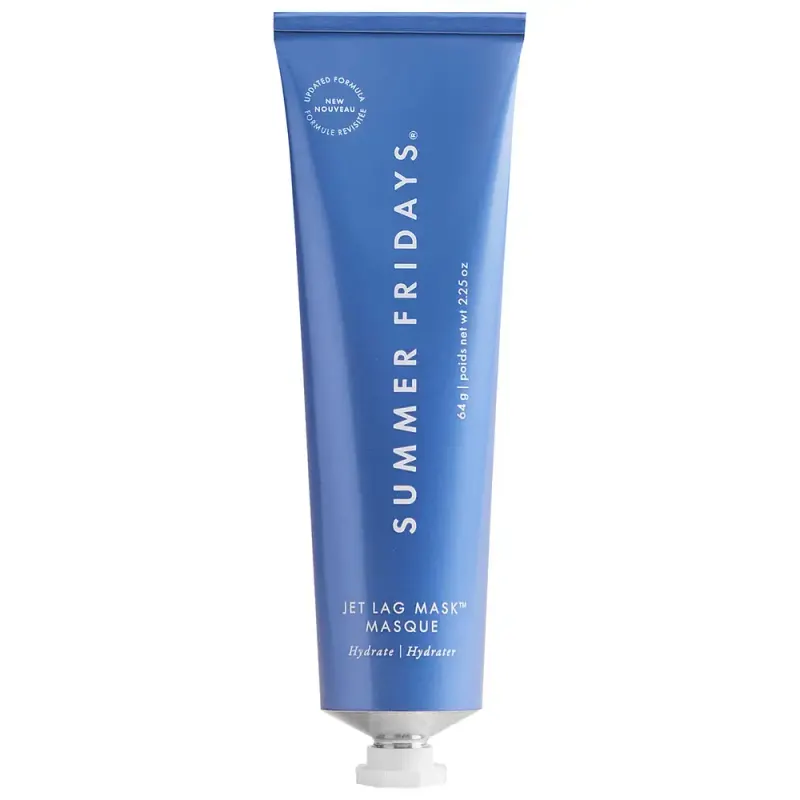
Summer Fridays Jet Lag Mask by Summer Fridays
Summer Fridays

Summer Fridays Jet Lag Mask

Wash Off Masksmasks

Safety score

Pregnancy-focused assessment

Low Risk76/100
Higher concernLower concern

One or more ingredients have a low-risk flag in MamaSkin's current assessment. Review the notes and your own circumstances.

Formula and assessment check

Ingredient safety review updated 24 November 2025. Product formulas can change, so compare the ingredients shown here with the packaging you have.

Report a formula mismatch

Ingredient breakdown

See how the listed formula falls across MamaSkin's pregnancy-focused risk bands.

32

No known risks

1

Low risk

0

Medium risk

0

High risk

Ingredients

Ingredients with a higher risk flag appear first, followed by the rest of the formula.

Phenoxyethanol

Low Risk

Phenoxyethanol is a preservative permitted in EU cosmetics up to 1.0%. The SCCS concluded it is safe for cosmetic use at that level, including when considering higher cosmetic exposure scenarios in infants and young children. Main practical concern is irritation/stinging on very sensitive or compromised skin rather than a pregnancy- or breastfeeding-specific risk.

Sources: SCCS/1575/16: Phenoxyethanol opinion https://health.ec.europa.eu/publications/phenoxyethanol_en
Water

No Known Risks

Caprylic/Capric Triglyceride

No Known Risks

Common emollient derived from fatty acids and glycerin. Used to soften skin and improve texture without pregnancy-specific concerns.

Sources: Cosmetic Ingredient Review (US); Scientific Committee on Consumer Safety (EU)

Show all (33)

Diheptyl Succinate

No Known Risks

A fatty or dicarboxylic-acid ester used for light emollience, slip and formula texture. Cosmetic ester assessments support normal topical use when formulated to be non-irritating, and no pregnancy-specific concern was identified.

Sources: CIR assessments of alkyl esters and related cosmetic emollient esters; European Commission CosIng ingredient inventory for Diheptyl Succinate.

Butyrospermum Parkii Butter

No Known Risks

Butyrospermum parkii (shea) butter is an emollient/occlusive that supports the skin barrier; topical use is considered low concern with no known pregnancy or breastfeeding risks.

Sources: CIR; EU/UK Cosmetics Regulation

Cetearyl Alcohol

No Known Risks

Fatty alcohol used as an emollient and thickener. Not the same as drying alcohols and not associated with pregnancy-specific concerns.

Sources: Cosmetic Ingredient Review (US); Scientific Committee on Consumer Safety (EU)

Hydroxyethyl Acrylate/Sodium Acryloyldimethyl Taurate Copolymer

No Known Risks

Large polymer thickener, stabilizer and texture ingredient used in gels, creams and sunscreens. Systemic exposure from topical cosmetic use is expected to be low, with no pregnancy- or breastfeeding-specific concern identified in reviewed cosmetic references.

Sources: CIR cosmetic ingredient safety references for acrylates copolymers; EU CosIng / cosmetics regulatory inventory

Niacinamide

No Known Risks

Niacinamide (vitamin B3) is widely used for barrier support and tone/texture benefits, and is generally considered safe in pregnancy and breastfeeding when used topically at cosmetic concentrations.

Sources: CIR; EU/UK Cosmetics Regulation

Pentylene Glycol

No Known Risks

Humectant and preservative booster. Considered safe for cosmetic use with low systemic exposure.

Sources: Cosmetic Ingredient Review (US); Scientific Committee on Consumer Safety (EU)

Glycerin

No Known Risks

Glycerin is a widely used humectant that supports hydration and the skin barrier, with a long safety record and no known pregnancy or breastfeeding concerns in topical cosmetic use.

Sources: CIR; EU/UK Cosmetics Regulation

Sorbitan Stearate

No Known Risks

This sorbitan fatty-acid ester is an emulsifier that helps oil and water phases remain mixed. The Cosmetic Ingredient Review concluded that sorbitan esters are safe in current cosmetic use; occasional contact reactions remain possible in sensitive users.

Sources: CIR: Safety Assessment of Sorbitan Esters as Used in Cosmetics https://www.cir-safety.org/supplementaldoc/safety-assessment-sorbitan-esters-used-cosmetics

Glyceryl Stearate

No Known Risks

Emulsifier and emollient used to stabilise creams and lotions. Not associated with pregnancy-specific concerns at cosmetic exposure.

Sources: Cosmetic Ingredient Review (US); Scientific Committee on Consumer Safety (EU)

Sodium Hyaluronate

No Known Risks

Sodium hyaluronate (hyaluronic acid salt) is used for hydration and cushioning, with very low systemic absorption from topical use and no known pregnancy or breastfeeding concerns at cosmetic concentrations.

Sources: CIR; EU/UK Cosmetics Regulation

Ceramide EOP

No Known Risks

Skin-identical barrier lipid used to support barrier structure and reduce dryness. Reviewed cosmetic safety sources support normal topical use, with no pregnancy- or breastfeeding-specific topical signal identified in the material reviewed.

Sources: CIR: Safety Assessment of Ceramides as Used in Cosmetics; EU CosIng / cosmetics regulatory inventory

Ceramide NP

No Known Risks

Skin-identical barrier lipid used to support the stratum corneum and reduce dryness. Reviewed cosmetic safety sources support normal topical use, with no pregnancy- or breastfeeding-specific topical signal identified in the material reviewed.

Sources: CIR: Safety Assessment of Ceramides as Used in Cosmetics; EU CosIng / cosmetics regulatory inventory

Ceramide AP

No Known Risks

Skin-identical barrier lipid used to support barrier function and reduce dryness. Reviewed cosmetic safety sources support normal topical use, with no pregnancy- or breastfeeding-specific topical signal identified in the material reviewed.

Sources: CIR: Safety Assessment of Ceramides as Used in Cosmetics; EU CosIng / cosmetics regulatory inventory

Aminopropyl Ascorbyl Phosphate

No Known Risks

aminopropyl ascorbyl phosphate is an antioxidant or vitamin-related cosmetic conditioning ingredient. Available ingredient and family evidence did not identify a pregnancy-specific concern at normal topical cosmetic exposure. This classification does not extend to oral supplements or medicinal doses.

Sources: CIR safety assessments of ascorbates and related antioxidant ingredients; European Commission CosIng; CIR Quick Reference Table https://cir-safety.org/sites/default/files/QRT-Update-Dec2025.pdf

Allantoin

No Known Risks

Allantoin is a soothing skin protectant commonly used to help reduce irritation and support comfort, with no known pregnancy or breastfeeding concerns in topical cosmetic use.

Sources: CIR; EU/UK Cosmetics Regulation

Bisabolol

No Known Risks

A terpene alcohol used for skin conditioning and soothing. Cosmetic safety reviewers reaffirmed bisabolol as safe at current cosmetic concentrations, and reproductive and developmental testing did not identify adverse effects. Bisabolol can increase skin penetration, so formulators should consider the safety of other ingredients in the same product.

Sources: CIR: Final Report on the Safety Assessment of Bisabolol https://cir-reports.cir-safety.org/view-attachment/?id=6fcf160b-8e74-ec11-8943-0022482f06a6; CIR re-review material https://www.cir-safety.org/sites/default/files/bisabolol.pdf

Panthenol

No Known Risks

Panthenol (pro-vitamin B5) is used for soothing and barrier support and is generally well tolerated, with no known pregnancy or breastfeeding concerns in topical cosmetic use.

Sources: CIR; EU/UK Cosmetics Regulation

Physalis Angulata Extract

No Known Risks

Castanea Sativa Seed Extract

No Known Risks

Tocopheryl Acetate

No Known Risks

Tocopheryl acetate (vitamin E derivative) is used as an antioxidant and skin-conditioning ingredient; it is considered low concern in topical use with no known pregnancy or breastfeeding risks at cosmetic concentrations.

Sources: CIR; EU/UK Cosmetics Regulation

Phytosphingosine

No Known Risks

Skin-conditioning lipid used in barrier-support formulas, commonly alongside ceramides and cholesterol. Reviewed cosmetic ingredient references do not identify a pregnancy- or breastfeeding-specific concern for normal topical use.

Sources: CIR cosmetic ingredient safety references for sphingolipids/skin-conditioning lipids; EU CosIng / cosmetics regulatory inventory

Capryloyl Glycerin/Sebacic Acid Copolymer

No Known Risks

A high-molecular-weight emollient polymer used for film formation and texture. The intact capryloyl glycerin/sebacic acid copolymer is expected to have limited dermal absorption, and no reproductive or pregnancy-specific signal was identified for normal cosmetic exposure.

Sources: European Commission CosIng ingredient inventory; published cosmetic ingredient and polymer safety information for capryloyl glycerin/sebacic acid copolymer.

Ethylhexylglycerin

No Known Risks

Preservative booster and skin-conditioning agent. Considered safe for cosmetic use with low systemic exposure when used as intended.

Sources: Scientific Committee on Consumer Safety (EU); Cosmetic Ingredient Review (US)

Tetrasodium Glutamate Diacetate

No Known Risks

Chelating agent used to bind trace metals and improve formula stability. CIR concluded it is safe as used in cosmetics; normal topical use is not associated with a pregnancy- or breastfeeding-specific topical signal in the material reviewed.

Sources: CIR: Safety Assessment of Tetrasodium Glutamate Diacetate and Beta-Alanine Diacetic Acid as Used in Cosmetics; EU CosIng / cosmetics regulatory inventory

Cucumis Sativus Fruit Extract

No Known Risks

A cucumber fruit extract used for skin conditioning. Cosmetic safety reviewers concluded that Cucumis sativus-derived ingredients are safe in current cosmetic practices of use and concentration when formulated to avoid sensitisation. No pregnancy-specific concern was identified for normal topical cosmetic exposure, although irritation or allergy to a botanical-containing formula remains possible.

Sources: CIR: Final Safety Assessment of Cucumis sativus (Cucumber)-Derived Ingredients https://cir-safety.org/supplementaldoc/final-safety-assessment-cucumis-sativus-cucumber-derived-ingredients

Cholesterol

No Known Risks

Skin-conditioning lipid used in barrier-support formulas, often alongside ceramides and fatty acids. Normal topical cosmetic use has no known pregnancy- or breastfeeding-specific concern identified in reviewed cosmetic references.

Sources: CIR cosmetic ingredient safety references for cholesterol and related sterols; EU CosIng / cosmetics regulatory inventory

Sodium Lauroyl Lactylate

No Known Risks

An emulsifier and surfactant made from lauric and lactic-acid components. Cosmetic safety reviewers concluded that alkyl lactyl lactates, including sodium lauroyl lactylate, are safe in current practices when formulated to be non-irritating and non-sensitising. No pregnancy-specific concern was identified for normal cosmetic use.

Sources: CIR: Safety Assessment of Alkyl Lactyl Lactates as Used in Cosmetics https://www.cir-safety.org/sites/default/files/alkylL062019final.pdf

Carbomer

No Known Risks

Polymer thickener used to create gel textures. Large-molecule ingredient with negligible systemic absorption.

Sources: Cosmetic Ingredient Review (US); Scientific Committee on Consumer Safety (EU)

Xanthan Gum

No Known Risks

Natural polysaccharide thickener used for stability and texture. Not associated with pregnancy-specific concerns.

Sources: European cosmetics regulatory framework

PEG-100 Stearate

No Known Risks

Emulsifier used to stabilize creams and lotions. Reviewed cosmetic safety sources support use of PEG stearates in cosmetics, with no pregnancy- or breastfeeding-specific concern identified for normal topical use.

Sources: CIR: Safety Assessment of PEG Stearates as Used in Cosmetics; EU CosIng / cosmetics regulatory inventory

Formulations can change without notice. For the most accurate result, compare this list with your packaging and scan the exact ingredient label in MamaSkin when you repurchase.

How to use this assessment

The risk band is the primary conclusion. The score adds detail within that band and should not be used to compare products as if a one-point difference were clinically meaningful.

MamaSkin provides pregnancy-focused information, not medical advice. Your midwife, GP, pharmacist or dermatologist should take priority when your circumstances differ from typical cosmetic use.

Read the full methodology